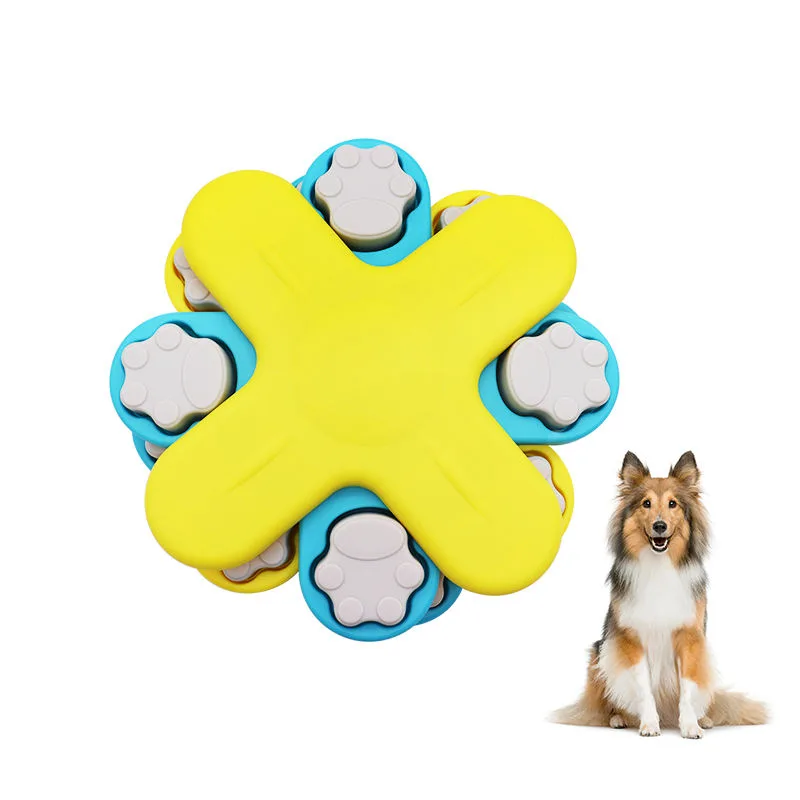
An interactive pet toy is a motion- or app-driven device that plays, dispenses treats or moves to keep a pet engaged. For wholesale sourcing, the two non-negotiables are material safety and the battery-cell spec. Our range runs ETPU and ABS builds: a motion-activated rolling ball in ETPU, 1000mAh rechargeable, 180x180x125mm, plus a PP puzzle and treat dispenser rated factory-direct. Battery is where cheap toys fail; a cell without a documented transport report limits air freight, so ask for the cell spec and charging circuit, not just the mAh figure. Standard catalogue toys ship from MOQ 50 pcs in 15-30 days; private label on existing tooling is MOQ 1,000 pcs; new-tool ODM is MOQ 3,000 pcs at 30-45 days including tooling. Our 2013-founded factory runs 1,000,000+ units annually, with CE/RoHS/FCC filed per model.
Key Specifications
The toy range spans ETPU and ABS electronics builds plus PP puzzle and treat dispensers. The motion-activated rolling ball uses ETPU, a 1000mAh rechargeable cell and a 180 x 180 x 125 mm body; the smart cat toy uses ABS with a built-in rechargeable pack of 1000mAh; the treat dispenser uses PP. The cell is the critical component, because a phone-grade cell without a documented transport report cannot legally move by air. Material declarations and CE, RoHS and FCC documents are filed per model, not as a blanket category claim. Battery-backed motion, laser and feather toys all share the same cell and switch quality requirement.
How Toy MOQ and Lead-Time Tiers Work
At 50 pcs you buy a stock catalogue toy. At 1,000 pcs OEM we keep the existing tooling and apply your logo and packaging. At 3,000 pcs ODM we develop a new mould for your own design. Lead time tracks tooling exactly as elsewhere: 15-30 days for stock and private-label orders, 30-45 days for a new mould including tooling and sample approval. Soft-goods toys and moulded electronics toys behave differently on MOQ because tooling weight varies, so price each SKU rather than assuming a single category number. On electronics toys the sample stage is where a weak switch or under-rated cell shows up before it reaches volume.
What to Verify Before You Place a Toy Order
Ask for the cell specification and the protection circuit, not only the mAh figure, and confirm the cell carries a documented transport report. A toy that cannot legally air-freight will break a launch on its own, which is why this single line item can decide whether a program is viable. Request a pre-production sample and run it hard for a week, since switch and motor failures appear under real use rather than on a bench. Material declarations, CE, RoHS and FCC should be filed per model. {stats}
OEM versus ODM for Interactive Pet Toys
OEM puts your brand on our proven toy: logo and packaging on existing tooling, MOQ 1,000 pcs, 15-30 days, no mould investment. ODM develops a toy shape and mechanism that is yours alone: a new mould to your design, MOQ 3,000 pcs, 30-45 days including tooling. Because toys are trend-sensitive, many buyers test several OEM designs across one season, keep the SKUs with repeat orders, then commit an ODM mould only to the winners. The cell and switch standard is identical on both routes, so the reliability floor does not change when you move to private design.
Frequently Asked Questions
What should I check on the battery of an interactive pet toy?
Ask for the cell specification, the mAh rating and the charging circuit separately, and check whether the cell has a documented transport report. A toy with a phone-grade cell and no transport documentation cannot legally move by air, which is enough to break a launch schedule on its own - this is where cheap toys fail first. Our rolling ball runs a 1000mAh rechargeable cell with a documented circuit, and we file compliance per model rather than a blanket claim. If a supplier only quotes the mAh figure and cannot describe the protection circuit, request a pre-production sample and a cell data sheet before you commit to a 1,000-unit run.
Which materials are standard for pet toys, and do they affect MOQ?
ETPU and ABS are the common builds for electronics toys, and PP for puzzle and treat dispensers. Material mostly affects durability and mouth-safety rather than MOQ; MOQ is driven by tooling weight. Standard catalogue toys ship from 50 pcs in 15-30 days, private label on existing tooling is 1,000 pcs, and a new mould is ODM at 3,000 pcs with a 30-45 day lead. Material declarations and CE/RoHS/FCC documents are filed per model and confirmed against your market at order, so do not accept a blanket certified claim without a per-model file. Tell us the pet size and the price point and we will match the material to it.
Do you offer samples before a bulk order?
Yes. Sample orders are welcome on any catalogue model, and the sample cost is deductible from your first bulk order. For a stock or private-label item we can usually ship a sample within days because the tooling already exists; for ODM it has to follow the new tooling, so budget the sample inside the 30-45 day window. Send the target market and application detail with the request, because performance can shift with how the product is used. Treat the sample as a real test rather than a formality: run it, check the numbers that matter for your channel, and give us the findings, since that is far cheaper than discovering a fault across a 1,000-unit production run.
What warranty and after-sales support do you provide?
Products carry a 1-year warranty against manufacturing defects, backed by after-sales technical support and replacement parts. The warranty covers the motor, the control board and the moving mechanism, not normal wear or damage from misuse. Because we are the manufacturer rather than a trading company, support is handled directly with our engineering team, so a fault is diagnosed against the actual production batch instead of being passed to a third party. Keep your batch and order reference on file; it lets us trace the exact components used in your run and resolve a claim quickly, and it also helps us fold the fix into the next production cycle.