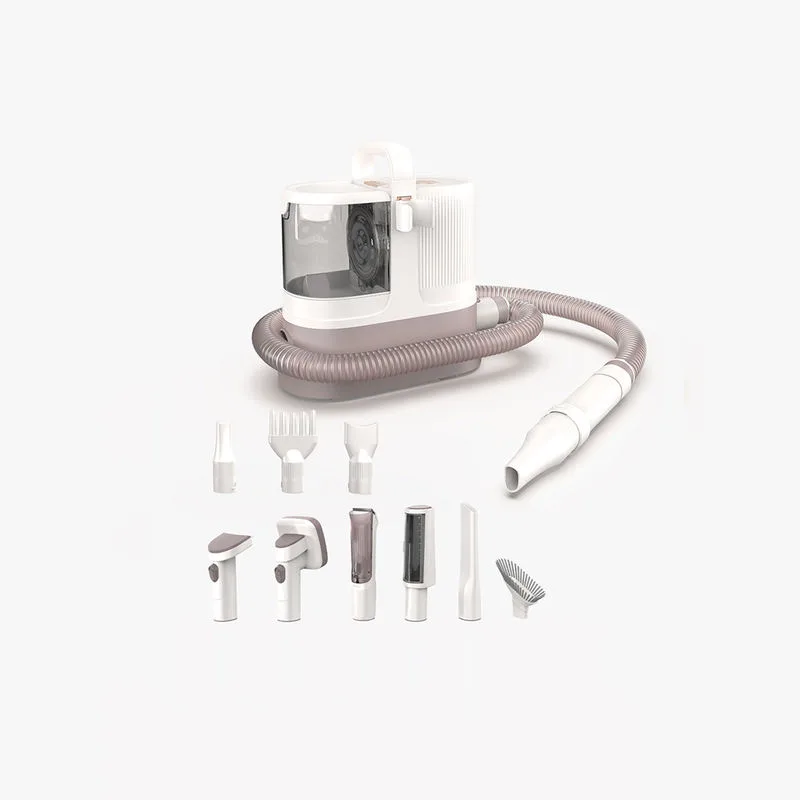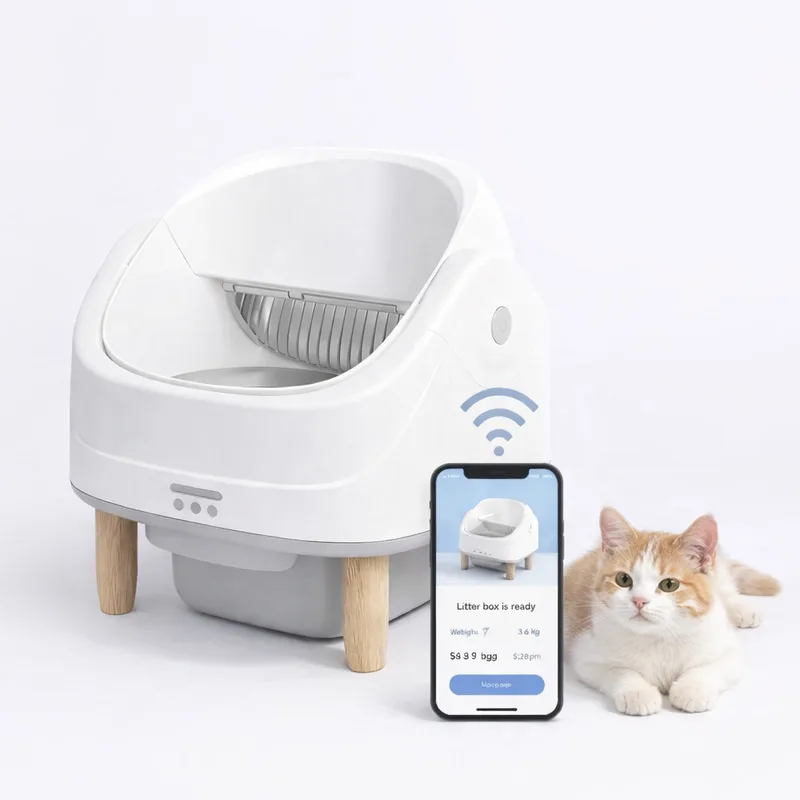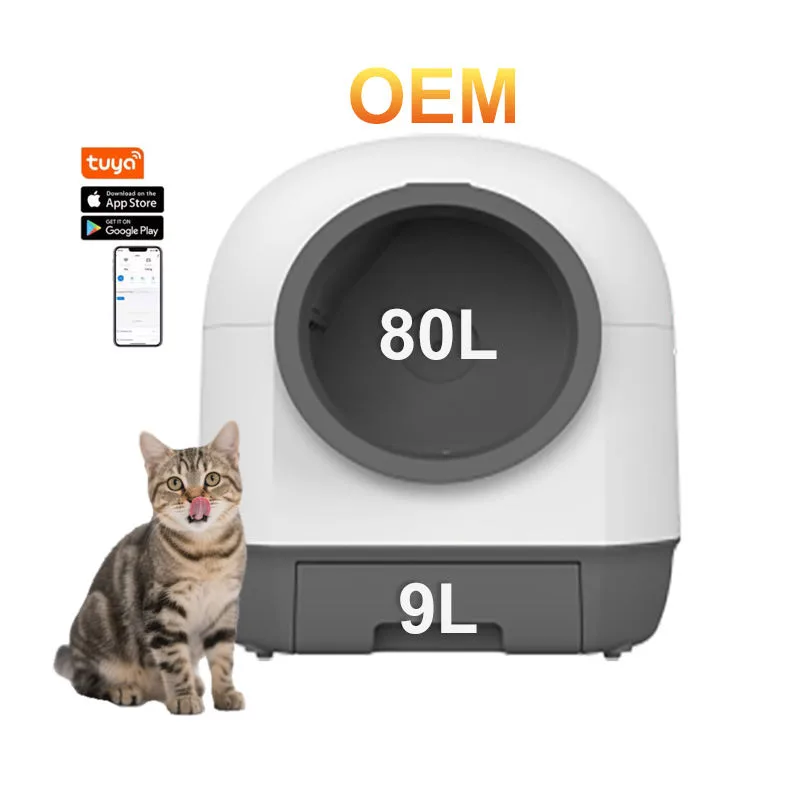
EU sourcing for smart pet products is the process of qualifying a manufacturer on compliance paperwork before negotiating unit price. Documents decide whether a shipment clears EU customs, while price only decides margin on each order. Our data shows buyers in Belgium and the Netherlands now request exact-model CE files: (1) GPSR responsible-person details, and (2) DDP pricing, all before any discount talk. In practice, a buyer who negotiates price first ends up re-quoting after a failed compliance review with a supplier, and the relaunch costs more than the saving. This guide follows the proven order across a catalogue built since 2013, with catalogue units priced from $25.90 to $76.90 and a documented defect rate below 0.5%. Compare an open-top 70L self-cleaning litter box with a 12000Pa pet grooming vacuum kit, and each section maps to a document request our team answers for EU buyers every single week.
1. Quick Answer: What EU Buyers Must Verify Before Ordering
The pre-deposit check is a six-item document list that protects both the budget and the launch date. First, exact-model CE documentation: (1) EMC and LVD under CE, plus RED for any Wi-Fi model. Second, RoHS for the electronics inside the device. Third, a GPSR responsible person established in the EU, mandatory since December 2024. Fourth, written safety behaviour for anything with motors, backed by the pinch-point test file. Fifth, a tested sample judged against written criteria, with sample cost 100% deductible from the first bulk order. Sixth, DDP delivery terms with the correct 220-240V EU plug. Items (1) through (3) decide whether a shipment clears customs, and items (4) through (6) decide whether listings survive an EU market-surveillance check. In practice, with over 500 custom projects delivered since 2013 at catalogue prices from $25.90, our data shows a supplier hesitant to name its testing body rarely turns transparent after payment.
2. CE, RoHS, RED and GPSR: The Paperwork That Stops EU Shipments
CE documentation is the entry ticket for mains-powered pet devices, and the file must match the exact model on the purchase order. EMC and LVD under CE cover electrical safety, RED covers any Wi-Fi model, RoHS covers the electronics, and GPSR has required an EU-established responsible person since December 2024. In practice, the whole review takes one email: request the Declaration of Conformity per model, confirm the testing body is named, and match the model number against the order before the deposit. A file produced within a day signals an orderly compliance house, while a request taking weeks signals paperwork created for the first time. Our data shows the file check is the single fastest disqualifier in supplier reviews, because a missing DoC surfaces before any engineering question does.
The four documents and the check each one requires:
| Document | What it proves | Buyer check |
|---|---|---|
| CE DoC (EMC/LVD) | Mains safety and electromagnetic compliance | Model number matches the PO |
| RED | Wi-Fi and Bluetooth radio compliance | Listed on every App-connected model |
| RoHS | Electronics free of restricted substances | Issued per model, not per brand |
| GPSR RP | EU responsible person on record | Name and address supplied before shipment |
3. Safety Documentation for Connected Devices
Safety documentation is the proof a device behaves correctly in a living room rather than only inside a test laboratory. Certification shows a laboratory passed the unit, while the sensor file shows the unit protects a pet during a real cycle. First, ask for the fail-safe sequence: (1) what happens when a cat enters the drum mid-cycle, because the sequence is what prevents injury. Second, ask for the incoming-inspection AQL level: (2) sensor quality control drives return rates more than any other component. Third, ask for entry dimensions plus the cat weight range for the exact model. Our data shows why the sequence matters: the open-top 70L unit at $66.90 uses dual safety sensors and halts the cycle the moment an entry is detected. In practice, with files updated since 2013, a supplier unable to put the fail-safe sequence in writing fails EU market-surveillance checks, and the 0.5% defect-rate claim stays unverifiable until the AQL file arrives.
4. Sample-First Ordering: Test Before You Commit
A sample is the cheapest quality inspection a buyer will ever run, and sample-first ordering is how experienced EU importers de-risk a launch. Sample cost is 100% deductible from the first bulk order. Sample fees on catalogue models are capped at $30, and a stock-unit sample ships within days because the tooling already exists. First comes the pass criteria, written by the buyer: (1) noise level in a quiet room, (2) a full cleaning cycle watched with a real cat, (3) suction measured at the hose end, and (4) app pairing on the buyer's own phone. Second comes the timeline: (1) a stock sample ships in days, while (2) an ODM sample follows the new tooling inside the 30-45 day window. Our data shows a sample tested against written criteria catches faults a specification sheet never shows. In practice, with the $30 fee deducted later, the sample is a real inspection rather than a formality for new buyers.
5. MOQ Tiers and Volume Pricing from 10 to 500 Units
MOQ is a tier system rather than a single number, and asking for all tiers in one email saves weeks. First, the catalogue tier: (1) 50 pieces per model, with exceptions from 10 pieces on the 9-in-1 grooming kit to 300 pieces on the 2000W blower dryer. Second, the OEM tier: (2) private label on existing tooling from 1,000 pieces in 15-30 days. Third, the ODM tier: (3) a new mould from 3,000 pieces at 30-45 days including tooling. Our data shows the spread reaches 60 times between tiers, which is why the tier request belongs in the first email. In practice, with this spread, single-number quotes hide the real minimum for the model a buyer wants at prices from $25.90.
A practical tier ladder for an EU launch looks like the following:
- 10-50 units - sample-plus validation runs on low-MOQ accessories to test listings and gather early reviews.
- 50-250 units - the first commercial run on a catalogue model in neutral packaging.
- 500+ units - price-break territory where freight shifts from express air to sea.
- 1,000 units (OEM) - buyer logo and packaging on proven tooling, 15-30 day lead time.
6. DDP Shipping to the EU: What It Covers and What to Ask
DDP is the freight term under which the supplier arranges transport, export clearance, import clearance and duties, so goods reach the door with no surprise invoices at the border. For a first order into Belgium or the Netherlands, DDP turns international logistics into a single landed-cost line. A DDP quote is only as strong as its assumptions, so ask three things per volume tier: (1) sea or air routing, (2) transit time in writing, and (3) the duty and VAT treatment on the declared value. First orders move by express air in days, while 250-unit runs shift to sea freight in weeks. Second, confirm the power adapter: (1) the EU runs 220-240V, (2) grooming vacuums cover 110-240V, and (3) litter box adapters are listed per region. Our data shows a 5% freight saving means less than inspectable paperwork. In practice, with Belgian launches since 2013, a wrong-plug unit cannot ship at all.
7. Warranty, Defect Rates, Spare Parts and App Fees
After-sales terms separate manufacturers from trading companies, and four questions expose the difference within minutes. First, warranty scope: (1) products carry a 1-year warranty against manufacturing defects covering the motor, the control board and the moving mechanism, with spare parts priced per component. Second, the historical defect rate: (2) our data shows a defect rate below 0.5% across an annual capacity of 1,000,000+ units built since 2013, and a supplier unable to state a defect number is asking the buyer to run quality control on its behalf. Third, spare parts: (3) ask which components - filters, brushes, blades, adapters - are stocked as replacements, because accessory availability decides whether a minor fault becomes a full return or a refund. Fourth, app dependency: ask whether the companion app carries an ongoing subscription fee. In practice, with Belgian buyers our team answers all four within one business day for orders above $10,000.
8. Payment and a Pre-Order Checklist
Standard payment on a first order is a 30% deposit with the 70% balance due before shipment, and larger OEM projects often negotiate milestones around tooling approval. Before the deposit leaves the account, the supplier email thread should hold answers to every item in this guide. The consolidated checklist:
- Exact-model CE DoC covering EMC and LVD, plus RED on connected models.
- GPSR responsible-person details in writing.
- Sensor logic, pinch-point test file and incoming-inspection AQL for motorized products.
- A sample order with pass criteria the buyer defined.
- Tiered unit pricing across realistic volumes, DDP to the door.
Send the list as one message rather than five separate emails, because suppliers answer complete checklists faster. Our data shows a single complete request gets a file set in two business days, since the documents already exist per model. In practice, with EU orders over $10,000 since 2013, 100% of first-round checklists are answered from existing files. Send the target market and volumes through our contact page, and the team will reply with the files and the numbers.
Frequently Asked Questions
What is the minimum order for smart pet products shipped to the EU?
The catalogue MOQ is 50 pieces per model, and per-SKU exceptions run in both directions across the range. Some grooming accessories start at 10 pieces, while heavier motorized units sit at 300 pieces because of component cost. Private-label OEM on existing tooling starts at 1,000 pieces, and full ODM development with a new mould starts at 3,000 pieces. First, confirm neutral packaging in writing: (1) some suppliers quote a different minimum for unbranded cartons. Second, size the trial inside the 50-250 piece range, which is how an EU brand validates a listing before scaling. Our data shows a manufacturer would rather quote a small first order than lose the reorders that follow a successful launch. In practice, with neutral packaging, the tier holds at 50 pieces on catalogue units priced from $25.90, so budget from that real number.
Which certifications do I need to import pet tech into the EU?
The CE certificate is the baseline document for any smart pet device entering the EU, and four frameworks cover the category together. First, EMC and LVD under CE for mains-powered products: (1) electrical safety and electromagnetic compatibility. Second, RED once the model carries Wi-Fi or Bluetooth. Third, RoHS for hazardous substances in the electronics. Fourth, GPSR, which has required an EU-established responsible person since December 2024. The badge on a listing matters less than the file behind it: a Declaration of Conformity issued for the exact model number on the purchase order, with the testing body named. In practice, with files maintained per model since 2013 at prices from $25.90, our data shows the full set assembles within one business day, and a supplier needing weeks is creating paperwork for the first time.
How does DDP shipping from China to Belgium or the Netherlands work?
DDP shipping is the arrangement under which the supplier handles freight, export clearance, import clearance and duties, so goods arrive with no additional charges. For a Belgian or Dutch buyer, DDP is the cleanest term on a first order because logistics become a single landed-cost line. First, request DDP quotes at each realistic volume: (1) routing changes with size. Second, ask the quote to state the procedure if a shipment is inspected at the border. Third, confirm the power adapter matches the market, since EU plugs run 220-240V and litter box adapters are listed per region. Our data shows inspectable border paperwork matters more than a 5% freight saving, because a held shipment misses the launch window entirely. In practice, with litter box orders built since 2013, the adapter listing and the DoC model number must match the invoice exactly at $66.90 or any price.
Can I order samples before committing to a bulk order?
Yes, and a reliable supplier expects the request before any bulk commitment. On catalogue models a sample ships within days because the tooling already exists, sample fees are capped at $30, and the cost is 100% deductible from the first bulk order. An ODM sample follows the new tooling and lands inside the 30-45 day development window. Before the sample ships, define a pass with four checks: (1) noise in a quiet room, (2) a full cleaning cycle observed with a real cat, (3) suction at the hose end, and (4) app pairing on the buyer's own phone. Our data shows a sample tested against written criteria is worth more than any factory audit certificate. In practice, with production-intent hardware in hand, buyers catch the exact faults their customers would have found in the field.