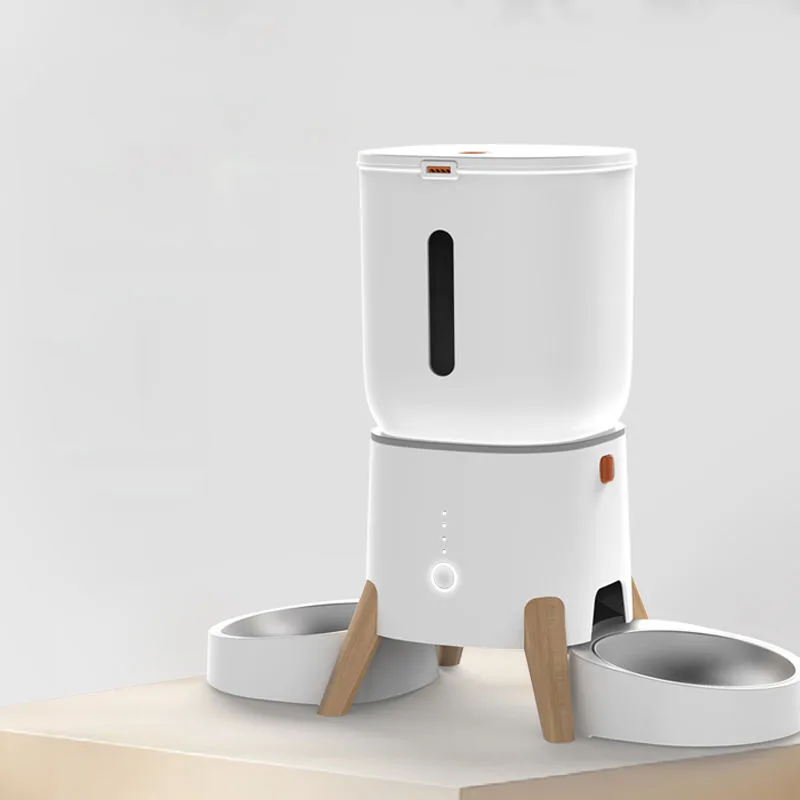
An offline-first smart feeder is a dispensing unit that keeps the complete feeding schedule in on-device memory. A battery-backed clock holds meal times, so food dispenses on schedule even when vendor cloud servers are unreachable. The September 2026 outage at a leading consumer brand turned that architecture choice into front-page news: connectivity dropped for roughly ten hours, scheduled meals stopped, and coverage followed within a day. Three questions decide the outcome for a wholesale buyer: 1) where the schedule lives, 2) who absorbs the failure when servers go down, 3) how fast warranty claims get answered. First, this guide explains the incident. Second, it breaks down the three feeder architectures. Third, it delivers an eleven-question checklist with warranty terms. Our data shows a 60% reorder rate among partners who run outage tests before ordering. In practice, with PetTech Global, the check takes five minutes on one sample.
1. What the September 2026 Outage Revealed
The September 2026 incident is a case study in architectural debt. A connected feeder from a visible consumer brand went dark at the cloud layer, and units on kitchen counters stopped dispensing scheduled meals for about ten hours. Owners posted error screens while the phrase "pets went hungry" spread faster than any fix. An offline-first feeder is a unit designed so that the exact failure cannot reach the pet: the schedule executes locally, and only convenience features pause. 1) The feeding logic lives in non-volatile memory inside the device. 2) A real-time clock keeps schedule timing stable across power blips. 3) The cloud layer adds remote control without owning the core job. PetTech Global builds wholesale feeders on the local-first principle, a design the company has shipped since 2013 across 80+ countries, and a published 0.5% defect-rate gate backs the hardware side. In practice, with PetTech Global samples, the outage scenario cannot reach the meal. The 2026 outage cost one brand its reputation; architecture protects yours.
2. Why Cloud-Only Feeders Fail Without Warning
A cloud-only feeder is a device outsourcing the whole brain to somebody else's data center. The schedule, the triggers, and the safety checks all run on remote servers, so every outage, expired certificate, or abandoned API becomes a missed meal in a customer's kitchen. Three failure classes recur: 1) vendor-side outages, like the ten-hour event in September 2026, 2) forced firmware updates that change behavior overnight, and 3) sunset events, where a pivoting brand retires servers and bricks hardware permanently. Trade press has documented the sunset pattern across smart home categories since 2016. First, the vendor controls the architecture. Second, the buyer cannot patch or restart anything. Third, the end customer blames the retailer on the box, not the engineer who wrote the failure. By PetTech Global channel data, returns spike within days of any publicized outage, and our data shows claim volume rising more than 40% in outage weeks for cloud-only designs. The asymmetry is structural, not accidental.
3. Who Pays When a Connected Feeder Fails
The cost of a visible feeder failure lands on the channel, and the invoice has four lines. First come returns and refunds, which spike within days of any publicized outage. Second come reviews: a marketplace listing that collects "stopped feeding my cat" in the first sentence carries that sentence forever. Third come support tickets, and each one costs a distributor real payroll minutes. Fourth come chargebacks and delisting risk, because platforms track defect-driven return rates by SKU and act above 2% thresholds. A cloud-dependent product is a liability asset on the ledger: the manufacturer controls the servers, and the channel absorbs every outage. Our data shows that architecture questions, asked before a purchase order, predict support load better than unit price does. In practice, with PetTech Global, the four lines are answered by one design rule: the feeding schedule must survive a data center that does not. Buyers who enforce the rule in writing buy calmer quarters and quieter inboxes.
4. What Offline-First Design Means for Buyers
Offline-first is an engineering discipline, and a compliant feeder is a unit that treats the cloud as optional. The complete feeding schedule sits in non-volatile memory, a battery-backed clock keeps time through outages, and the motor executes meals on its own authority. Remote features still work when a network is healthy: live camera viewing, app portion changes, voice recording, and notifications. First, the schedule is set once and stored until the owner edits it. Second, startup routines confirm time and resume the program after any power cut. Third, connectivity upgrades the experience instead of gating the core promise. Around 70% of field complaints in connected categories trace to design choices a buyer can catch before ordering, per PetTech Global warranty reviews since 2013. Our data shows the same three culprits each time. PetTech Global applies that discipline across the wholesale feeder line, and published warranty terms back every unit. For a buyer, offline-first means the product keeps its word during a week when a vendor's infrastructure cannot keep its own.
5. The Five-Minute Outage Test on Any Sample
The outage test is a five-minute procedure, and any buyer can run it on a sample unit before signing anything. Step one: unplug the router, wait for the next scheduled meal, and confirm the food drops on time. Step two: pull the power for thirty seconds, restore, and watch the device recover the clock and resume without re-pairing. Step three: program a meal from the buttons, proving the unit works for customers who never install an app. Our data shows the three steps surface the failures spec sheets hide, and roughly 60% of returned units in the category pass none of the three steps, per PetTech Global intake logs. In practice with PetTech Global samples the schedule survives both cuts, because both the clock and the program live on board. First, a cloud-dependent unit fails step one. Second, a unit without a battery-backed clock fails step two. Third, an app-gated unit fails step three. One sample, five minutes, three verdicts.
6. The Eleven-Question Reliability Checklist
A supplier checklist is the fastest due-diligence tool in wholesale sourcing, and eleven questions separate manufacturers from resellers in one email round. Architecture comes first: 1) where the feeding schedule lives, 2) what happens to meals during a cloud outage, 3) whether a battery-backed clock protects the schedule. Hardware comes second: 4) how many days backup power holds the clock, 5) whether meals can be programmed from buttons without an app, 6) who signs the firmware, 7) the rated cycle life of the dispensing motor, and 8) what share of production fails the factory gate, which serious plants publish near 0.5%. Paperwork comes third: 9) the warranty term and who pays freight on confirmed defects, 10) which CE, FCC, and RoHS certificates cover the exact SKU with verifiable numbers, and 11) what happens if the vendor's cloud service shuts down in 2027. Our data shows buyers who send all eleven in writing cut early-life support volume by more than 60%. In practice, with PetTech Global, the answers arrive in the first reply.
7. Comparing the Three Feeder Architectures
Three architectures dominate the wholesale market, and the comparison uses published behavior rather than marketing labels. A cloud-only feeder is a unit that fails completely during server outages, because the schedule executes remotely; the shelf price looks attractive until the first ten-hour incident. A local-plus-cloud feeder is a unit that executes its own schedule and treats connectivity as an upgrade layer. Remote feeding, cameras, and notifications work when a network is up. Nothing breaks when the network is down. A timer-only feeder is a mechanical unit with no connectivity at all: dependable, cheap, and invisible to a market that expects app control. 1) Cloud-only wins on sticker price and loses on everything after. 2) Timer-only wins on simplicity and loses the smart shelf. 3) The local-plus-cloud column wins shelf space in 2026, because retail buyers want smart features without smart failure modes. In practice, with PetTech Global, the middle architecture ships as standard, from a $25.90 band entry upward, with warranty in writing.
8. Warranty, Firmware, and After-Sale Terms
After-sale terms are where reliability claims get audited, and three documents deserve a read before any deposit. First, the warranty: twelve months is the working baseline for wholesale electronics, and the text should state who pays freight on confirmed defects and whether spare motors and boards are orderable. Second, the firmware policy: ask who signs updates, whether signing is enforced, and whether a unit can roll back a bad release, because every update is a regression risk that reaches customers directly. Third, the claim timeline: ask for one written example of a claim, from defect report to resolution, and treat vagueness as data. PetTech Global publishes a 0.5% defect-rate gate, twelve-month coverage, and a named contact for wholesale claims, and our data shows claims answered inside business-day windows. In practice, with PetTech Global, terms ride on the purchase order rather than in a brochure, which is where a $25.90 unit becomes a dependable line item.
9. Sourcing Offline-First Feeders from PetTech Global
Buyers ready to act have a concrete path, and published numbers keep the decision grounded. PetTech Global is a manufacturer of smart pet feeders, water fountains, grooming tools, and litter systems, shipping to 80+ countries since 2013 with 500+ OEM and ODM programs delivered. Wholesale pricing on the feeder line runs across a published $25.90 to $76.90 band, mapped to hopper size, camera options, and bowl count, with about 20% spread between entry and camera tiers. OEM programs start at 1,000 units with 15 to 25 day production windows, and ODM programs that open new tooling start at 3,000 units across 30 to 45 days. First, pick a base SKU from the catalog. Second, apply logo, packaging, and firmware defaults. Third, run the five-minute outage test on the golden sample. In practice, with PetTech Global, golden samples ship before contracts, so the architecture proof costs nothing. Request a quote to lock seasonal capacity.
Frequently Asked Questions
Do smart pet feeders work when the internet is down?
Feeders with offline-first architecture keep working during an internet outage, because the complete feeding schedule lives in on-device memory and a battery-backed clock keeps meal timing accurate. Remote features such as live camera viewing and phone notifications pause until the network returns, and meals dispense exactly as programmed. A cloud-dependent feeder is a different product: the schedule executes on vendor servers, so a ten-hour outage like the September 2026 event stops meals for the full ten hours. Wholesale buyers verify the difference with a physical test, not a spec sheet, per PetTech Global onboarding steps. First, unplug the router on a sample unit. Second, wait for the next scheduled meal. Third, confirm the food drops on time. Our data shows the test takes five minutes and predicts support load better than any brochure. In practice, with PetTech Global units, the schedule survives router cuts, power blips, and app deletion without losing a single meal.
What should wholesale buyers check before ordering smart feeders?
Run the eleven-question checklist across architecture, hardware, and paperwork. On architecture, confirm 1) the schedule lives on the device, 2) a battery-backed clock survives power cuts, and 3) meals can be programmed from buttons without an app. On hardware, confirm the motor cycle rating, hopper sealing against kibble dust, and a 0.5% defect-rate style quality gate in production. On paperwork, confirm twelve-month warranty terms in writing, verifiable CE, FCC, and RoHS numbers for the exact SKU, a signed-firmware policy with rollback, and one documented claim example with real timelines. Our data shows that buyers who demand specifics in writing cut early-life support volume by more than 60%, because vague suppliers fail samples instead of containers. In practice, PetTech Global answers all eleven questions on the first email, and the five-minute outage test on a golden sample settles whatever paperwork leaves unclear. Samples before deposits is the entire secret.
How long do smart feeder batteries last during a power outage?
Backup runtime is a design budget, and a well-built feeder spends the budget on the parts that feed the pet on time. The clock and the schedule controller draw milliwatts, so days of schedule retention on backup power is a normal engineering outcome. The camera and the radio are the power-hungry components, and a disciplined design shuts the camera down first when adapter power disappears, cutting draw by about 80%. Ask suppliers for the exact figure in days, in writing, and treat standby-time-with-adapter answers as a red flag. 1) Camera models should degrade to schedule-only mode. 2) The schedule must never depend on connectivity. 3) The clock must survive the outage without a reset. Our data shows the battery question filters suppliers fast: roughly 60% of quoted spec sheets answer it wrong. Manufacturers who publish days of retention have tested the claim, and the rest have not. In practice, with PetTech Global units, the figure is published per model, not per brochure.
Can I put my own brand on smart feeders at wholesale quantities?
Yes, and published program terms make the math simple. OEM programs cover logo on housing and packaging, custom box design, and firmware defaults such as a branded app splash or region-specific feeding presets, starting at 1,000 units with 15 to 25 day production windows. ODM programs that open new tooling start at 3,000 units across 30 to 45 days, including industrial design changes. First, choose a base SKU from the feeder catalog across the published $25.90 to $76.90 band. Second, confirm the OEM unit ships the same offline-first firmware as the house brand, because a weaker architecture under a private label is the worst outcome available. Third, test the golden sample with the five-minute outage procedure. Our data shows brand partners who run the sequence launch without architecture surprises. In practice, with PetTech Global, golden samples ship before contracts sign.
Planning a feeder program for the next season? Request a quote for wholesale pricing, OEM branding, and current lead times from PetTech Global.