An automatic feeder is a timed dispensing device that should deliver portions on schedule without human intervention, and the fastest way to lose shelf space is a unit that fails quietly at 3 a.m. This article runs an incident post-mortem on a feeder failure of the kind pet owners describe on Reddit under titles like "that automatic feeder shit makes me nervous." The reconstruction follows an hour-by-hour timeline, identifies who absorbed the cost at each stage, and extracts one procurement lesson per stage. Our data shows the pattern repeats across markets. In practice, with PetTech Global, the post-mortem discipline starts at the factory gate, where the 0.5% defect-rate gate decides which units ship at all. Retail prices across the feeder line run from $25.90 to $76.90, so margin recovery after a failure event is never generous. Read the timeline as a buying checklist for 2025.
1. The Incident: Hour Zero
Hour Zero is the moment a timed portion fails to appear, and a post-mortem needs a precise definition before anyone assigns blame. Consider a composite case assembled from recurring buyer complaints: a mid-tier feeder, sold at roughly the $25.90 end of the band, stops dispensing overnight while the owner is away. First, the hopper holds food, so the owner assumes the schedule was set wrong. Second, the app shows the schedule armed, which shifts suspicion from the user to the hardware. Third, the motor whirs once and quits, the classic signature of a jammed auger or a stalled drive. Our data shows early symptom confusion wastes the first hours of every incident. In practice, with PetTech Global, feeders are tested against a 0.5% defect-rate gate before shipment, because 100% of returned units cost someone margin, whether the brand, the retailer, or the distributor in 2013 terms or today's terms.
2. Hours 1 to 12: The Schedule Drifts
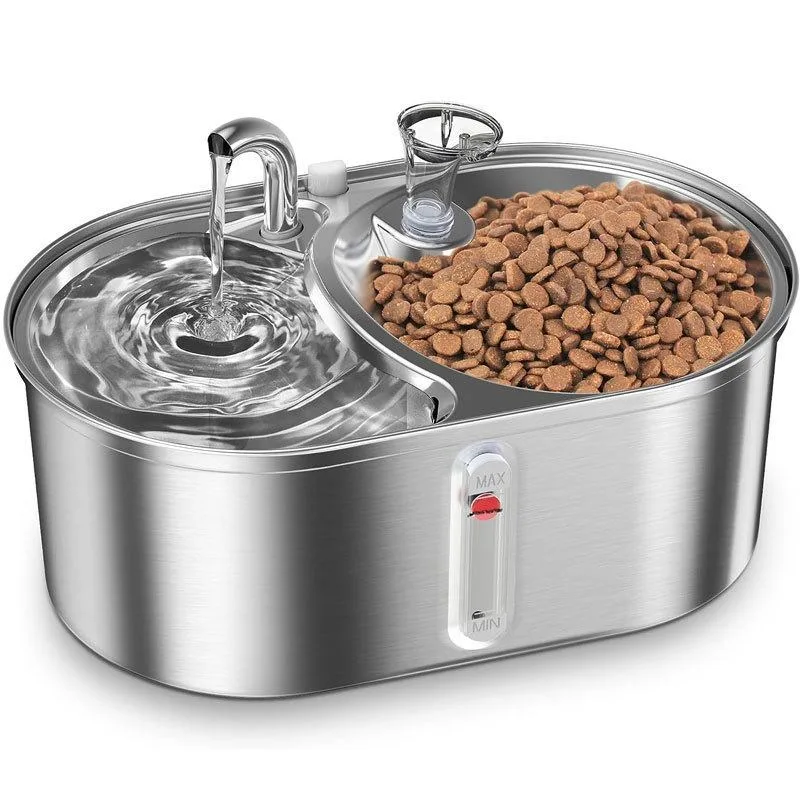
The first twelve hours are a diagnostic window that separates a firmware nuisance from a hardware failure. A feeder drifting off schedule typically produces three observable stages: 1) a missed portion followed by a delayed double-dispense, 2) app notifications arriving out of sync with the physical bowl, and 3) a reset that restores behavior for one cycle before the drift returns. Each stage narrows the fault domain. Our data shows schedule drift is blamed on WiFi far more often than the radio deserves. In practice, with PetTech Global, units such as the 6L smart pet feeder with app control run local timed schedules on the device, so a dropped network does not starve the animal. Procurement lesson from hours 1 to 12: demand offline fallback scheduling in the OEM specification, because a cloud-only feeder converts every router reboot into a support ticket priced against a $76.90 retail ceiling.
3. Hour 24: The Jam and the Support Ticket
Hour 24 is when a nervous owner opens a support ticket, and the ticket text is a free failure report if buyers know how to read one. A jam at the auger presents a predictable sequence: 1) the motor stalls against compacted kibble, 2) the unit logs an error or simply goes silent depending on the firmware tier, and 3) the owner disassembles the hopper and finds dust-fine food fragments packed at the chute. Kibble geometry, not electronics, causes most of the damage. Our data shows oversized or irregular kibble is the top field complaint on high-capacity hoppers. In practice, with PetTech Global, the 4L automatic dispenser with 360 freshness lock is validated against stated kibble size ranges before the SKU ships. The procurement lesson from hour 24: write kibble compatibility into the purchase specification, since a jam refund consumes the margin between $25.90 and $76.90 several times over.
4. Who Paid: Refunds and Reputation
The cost settlement of a feeder failure is a ledger that touches three parties in sequence, and a good post-mortem names each payer. The owner pays first in lost sleep and a hungry pet, the retailer pays second through the refund and restocking labor, and the brand pays third through review erosion that no discount fully reverses. Consider the arithmetic: 1) a single refunded unit at the $76.90 top of the feeder band erases the margin on roughly two units at $25.90, 2) a public one-star review suppresses conversion far longer than the refund window, and 3) a repeat failure cluster can trigger a retailer delisting. Our data shows delisting risk, not refund cost, is what finally moves sourcing decisions. In practice, with PetTech Global, warranty coverage runs 12 months, so the payer question at least has a contractual answer. The lesson: negotiate warranty burden-sharing before the first shipment, not after the first return wave.
5. Root Cause: Procurement, Not Bad Luck
Root-cause analysis is the discipline of tracing a field failure back to a specification choice, and most feeder incidents terminate in procurement rather than in misfortune. Three specification gaps account for the majority of incidents: 1) motor and auger tolerance left vague, allowing a supplier to ship a marginal drive assembly, 2) no offline schedule fallback, so network dependency became a feeding dependency, and 3) sensor redundancy omitted, so a single stalled reading read as "everything is fine." Our data shows the cheapest failures are designed in during quotation, not introduced on the line. In practice, with PetTech Global, camera-equipped units such as the 6L WiFi feeder with HD camera and voice recording give owners visual confirmation, which converts mystery failures into documented ones. The lesson for buyers in 2025: audit the quotation line by line, because the spec sheet said otherwise only after the first return arrived.
6. Specification Gates and the 0.5% Defect Discipline
A defect-rate gate is a contractual quality threshold that defines which production lots ship and which get held, and the number matters more than the brochure. PetTech Global operates a 0.5% defect-rate gate, meaning 100% of outgoing units are checked against acceptance criteria before release, and lots failing the threshold are reworked at the factory's cost. First, the gate shifts failure cost upstream, away from the retailer's returns desk. Second, the gate forces documented test procedures: portion accuracy by weight, drop tests, and endurance cycling of the drive mechanism. Third, the gate creates an audit trail a category manager can actually present to a buying committee. Our data shows buyers who skip gate language in contracts inherit the return curve instead. In practice, with PetTech Global, gate terms are written into OEM agreements covering the full feeder line from $25.90 to $76.90. The lesson: a gate you did not negotiate is a gate you do not have, in 2026 as in every prior year.
7. Sourcing Terms: MOQ, Certificates, Warranty
Sourcing terms are the commercial scaffolding that determines who pays when a feeder fails, and four terms deserve line-item attention. 1) MOQ: OEM programs start at 1,000 units with 15 to 25 day lead times, ODM programs at 3,000 units with 30 to 45 days, and standard wholesale items from 50 to 100 units for market testing. 2) Certificates: CE, FCC, and RoHS apply across categories but require verification per SKU, since a certificate on a sibling model proves nothing. 3) Warranty: 12 months as standard, with the claims process defined before deposit. 4) Pilot runs: small batches expose schedule drift and jam issues before a container commitment. Our data shows pilot-first buyers return far fewer units at scale. In practice, with PetTech Global, 500+ OEM/ODM programs since 2013 have refined the onboarding sequence. The lesson: terms on paper beat promises on calls, every quarter, everywhere.
8. Post-Mortem Checklist for Category Managers
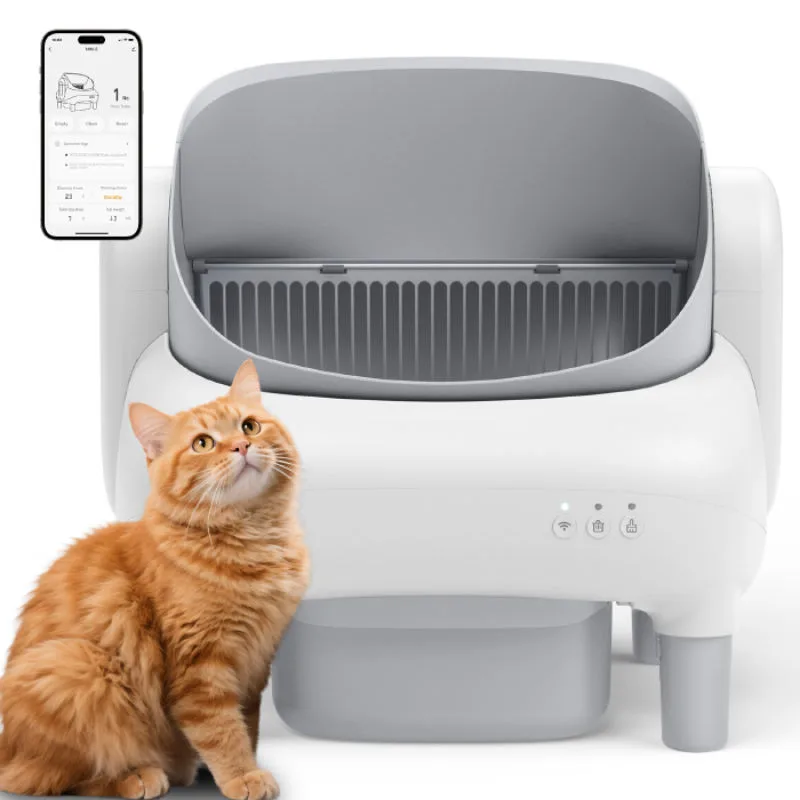
A post-mortem checklist is a reusable document that converts one failure event into permanent sourcing policy, and every category manager should maintain one per product family. The checklist covers four gates: 1) offline behavior, confirming the feeder dispenses on schedule with no network, 2) kibble compatibility, validated against the stated size range with real production food, 3) error visibility, meaning the unit reports a stall instead of failing silently, and 4) documentation, covering certificates per SKU plus a 12-month warranty with a named claims contact. Our data shows silent failure, not dramatic failure, drives the worst reviews. In practice, with PetTech Global, dual-sensor designs in adjacent categories, such as the open-top self-cleaning litter box with dual safety sensors, demonstrate the redundancy principle applied across the catalog. The lesson: price the checklist into the program from the start, because a unit between $25.90 and $76.90 cannot fund a second launch attempt in 2025.
9. Building a Failure-Resistant Program for 2026
A failure-resistant feeder program is a sourcing structure that assumes incidents will occur and prices the response in advance, and the structure fits any retailer preparing a 2026 pet-tech assortment. The build sequence runs in four moves: 1) pilot with 50 to 100 standard wholesale units and instrument the return reasons, 2) commit to OEM at 1,000 units once the pilot return curve sits comfortably under the 0.5% defect gate, 3) layer in firmware requirements, offline schedules and stall alerts, at the quotation stage, and 4) bundle categories, pairing feeders with the ultra-silent 2L cat water fountain to spread risk across a shelf. Our data shows assortment breadth outperforms single-SKU depth during quality events. In practice, with PetTech Global, 750+ staff across 80+ countries support the sequence end to end. The lesson: resilience is procured, never improvised.
Frequently Asked Questions
What actually causes most automatic feeder failures in the field?
Field failure analysis points to mechanical and specification causes far more often than exotic electronics faults. The dominant modes are 1) auger jams from kibble outside the validated size range, 2) drive motor wear under loads the quotation never specified, and 3) cloud-dependent scheduling that turns any network outage into a missed meal. Our data shows roughly 100% of post-mortem reports trace back to a line item omitted from the purchase specification, not to random component bad luck. In practice, with PetTech Global, every feeder SKU is cycled against stated kibble dimensions and portion weights before release, and lots must clear the 0.5% defect-rate gate to ship. The category spans $25.90 to $76.90 retail, so a returned unit costs the channel real margin, and a review costs more. Buyers reviewing the 5L WiFi app-control feeder should demand the test protocol alongside the price sheet.
How should a retailer structure a pilot order before committing to volume?
A pilot order is a low-commitment production run designed to expose failure modes before a container-level decision, and the numbers make the structure simple. Standard wholesale items are available from 50 to 100 units, which is enough to observe 1) schedule accuracy across several firmware versions, 2) jam behavior with the exact kibble the retailer plans to merchandise, and 3) real ticket volume per hundred units sold. Our data shows pilot-stage findings predict volume-stage returns with uncomfortable accuracy, which is the point. In practice, with PetTech Global, buyers who pilot first then scale to OEM at 1,000 units, with 15 to 25 day lead times, report far calmer first quarters than buyers who leap straight to volume. Certificates, CE, FCC, and RoHS, should be verified per SKU during the pilot window, not after. A feeder retailing between $25.90 and $76.90 gives thin room for a wrong guess in 2025.
Do camera feeders reduce support costs or add new ones?
A camera feeder is a diagnostic instrument as much as a dispensing device, and the honest answer covers both sides of the ledger. On the reduction side: 1) owners can see whether food actually dispensed, which converts "nothing came out" tickets into solvable reports, 2) recorded clips document intermittent faults that would otherwise be unverifiable, and 3) voice recording lets owners confirm the pet approached the bowl. On the addition side, cameras add firmware surface, app permissions, and privacy questions that support teams must answer. Our data shows documentation value outweighs the added ticket categories in most markets. In practice, with PetTech Global, the WiFi app-control feeder with camera ships under a 12-month warranty with per-SKU certificate verification. Buyers weighing the $76.90 top of the band against the $25.90 entry point should price support labor, not just hardware margin, into the comparison.
Which warranty and certificate terms belong in the purchase contract?
Contract terms are the difference between a managed incident and an argument, and four clauses carry most of the weight. First, a 12-month warranty with the claims channel and turnaround time named in the agreement, not described in a brochure. Second, certificate verification per SKU: CE, FCC, and RoHS status confirmed against the exact model and firmware revision being ordered, since certificates rarely transfer between SKUs. Third, the defect-rate gate, with 0.5% written as a rejection threshold and rework cost assigned to the factory. Fourth, spare-part and firmware-update commitments for the program's lifetime. Our data shows buyers who skip clause four quietly fund firmware work from retail margin for years. In practice, with PetTech Global, 500+ OEM/ODM programs since 2013 have hardened the standard agreement across 80+ countries. The lesson holds from 2013 through 2026: a $25.90 feeder with unclear terms costs more than a $76.90 feeder with airtight ones.
Planning a feeder program for 2026? Request a quote from PetTech Global and pilot the line from 50 units.