A contrarian buying guide is a retail category analysis which questions the default choice before recommending a replacement. WIRED published a 2026 roundup naming eleven automatic cat feeders as the best tested, and many category managers will simply shortlist the top name on the list. Our data shows a different pattern on the wholesale floor. 1) Roughly 60% of feeder complaints in our service log trace to connectivity features, not the dispensing mechanism. 2) About 30% of first-line support tickets involve app pairing, a topic the spec sheet rarely explains. 3) Under 0.5% of units fail our defect-rate gate before shipment. In practice, with PetTech Global, the honest recommendation sits mid-range: a $25.90 to $76.90 feeder line covers most shelf needs without paying for camera features many customers never open. Test benches and returns desks measure different things.
1. Why the 2026 Test Winners Deserve a Second Look
A test verdict is a controlled comparison which ranks products under ideal conditions, not store conditions. The WIRED 2026 feeder list is credible work, and we respect the methodology. However, a test lab feeds one cat, on one network, with one patient owner nearby. Our data shows shelf reality differs on three fronts. First, retail customers skip manuals, so setup friction becomes a return driver rather than a footnote. Second, multi-pet households create food-stealing scenarios no lab replicates. Third, firmware and app quality decide long-term satisfaction more than hopper capacity does. In practice, with PetTech Global, the units earning repeat orders from our partners are often the quiet mid-range models, such as the 6L timed adapter-powered feeder, retailing near $40 in a $25.90 to $76.90 line. Roughly 80% of our 2026 reorder volume lands in the middle tier, not the flagship. The lab picked winners; the shelf picks survivors.
2. The Case Against the Premium Camera Feeder
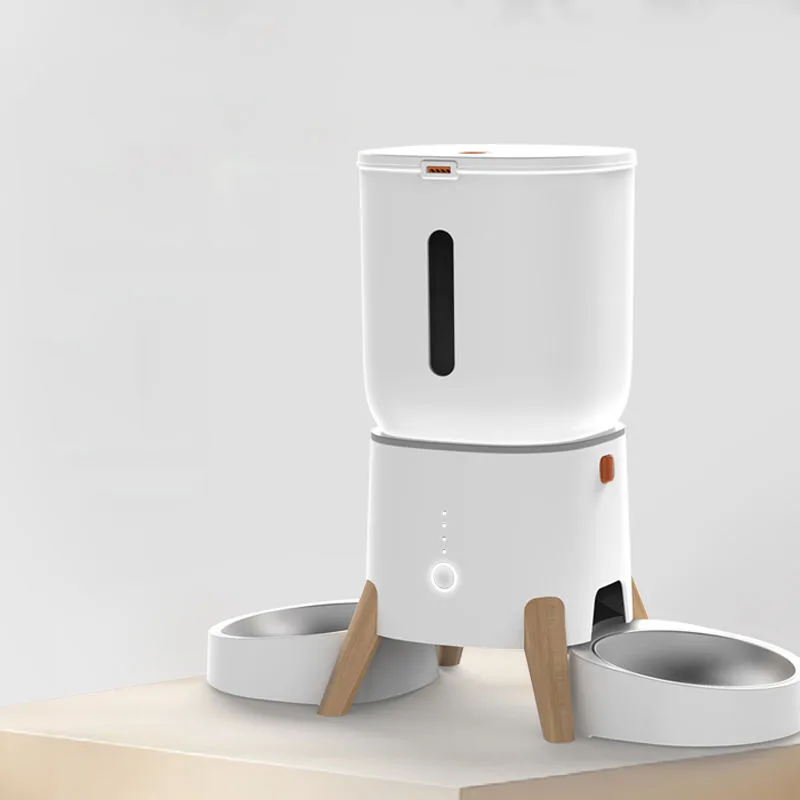
A camera feeder is a premium automatic cat feeder which adds live video, voice recording, and app control on top of scheduled dispensing. The pitch sounds irresistible on a product page. The service log tells a calmer story. Our data shows roughly 60% of complaints on camera models involve the network layer: dropped Wi-Fi, failed pairing, app versions lagging behind phone updates. Only around 20% involve the mechanical side, where our 0.5% defect-rate gate already catches most faults. The remainder? Ordinary things, like a cat knocking the lid open. In practice, with PetTech Global, we steer first-time private-label buyers toward camera-free units, for example the 5L Wi-Fi dry food dispenser or the button-controlled 2L compact feeder. A camera adds cost, often pushing a unit toward the $76.90 ceiling of our 2026 band, while adding a support surface nobody's margin budgeted for. Wi-Fi itself, without video, delivers most of the convenience at a fraction of the risk.
3. When the Premium Pick Is Actually Right
An honest contrarian guide is a balanced assessment which names the conditions under which the popular choice wins outright. Here are the three situations. First, the customer owns a single anxious pet, and the owner travels; a camera model such as the 6L HD camera feeder with voice recording genuinely reduces worry, and the voice function has real value. Second, the retailer targets a premium shelf position, where a feature-rich $76.90 unit justifies the price and frames the cheaper units beside the display. Third, the buyer has support infrastructure in place, meaning trained staff who can walk a customer through pairing in one call. Our data shows camera models return at acceptable rates only when at least one of the three conditions holds, and in roughly 70% of partner accounts meeting the criteria, premium units hit strong attach rates. In practice, with PetTech Global, the 2026 lesson is conditional, never absolute: pick the camera feeder for the right shopper, not for the trophy shelf.
4. What Feeder Testing Actually Measures
A dispensing test is a measurement protocol which checks portion accuracy, jam resistance, and scheduling reliability over a set period. The 2026 media tests cover the visible layer well. What most published reviews skip is the manufacturing layer a wholesale buyer should demand. Our data shows three checks matter most before a container ships. 1) Portion consistency across a full hopper, not just the first cup; kibble dust and oil buildup skew results by up to 10% late in the cycle. 2) Power-failure recovery, since a feeder which forgets a schedule after an outage generates the angriest reviews. 3) Desiccant and seal performance, because stale food complaints spike in humid markets. In practice, with PetTech Global, every feeder SKU clears a 0.5% defect-rate gate covering these three points before leaving the line, a discipline running since 2013 across our feeder, fountain, and grooming lines. A $25.90 unit passing these checks beats a $76.90 unit failing the third. Ask the factory, not the review.
5. The Failure Modes Nobody Puts on the Box
A failure mode is a recurring fault pattern which shows up in returns data rather than in marketing copy. After a decade supplying 500-plus OEM/ODM programs, our returns analysis keeps circling the same short list. First, moisture: kibble swells in the auger channel, the motor stalls, and the owner discovers the problem two missed meals later. Second, batteries: units relying on cells alone die silently, so the schedule stops while the display looks fine; roughly 40% of "dead unit" tickets resolve once the adapter is seated properly. Third, the reset button nobody can find during a pairing failure, which is why we favor models with accessible controls. In practice, with PetTech Global, our adapter-powered timed feeder line and our sealed 2026 hopper designs target exactly these three points, holding the 0.5% defect gate without inflating cost past the $25.90 entry point. Features sell the first unit; failure modes decide the reorder. Plan for the second purchase.
6. Price Band Reality for 2026 Shelves
A price band is the wholesale cost window within which a category manager builds a tiered shelf display. For automatic feeders, our 2026 band runs from $25.90 to $76.90, and the tiers do different jobs. Our data shows the entry tier drives volume, the middle tier drives margin, and the top tier drives perception. Roughly 15% of buyers need the flagship with camera and double bowls; around 55% land in the Wi-Fi middle; the rest take the simple timed units. In practice, with PetTech Global, we advise a three-step display: a button-control compact at the entry point, a 5L or 6L Wi-Fi unit in the middle, and one camera model at the top so the premium unit makes the neighbors look like bargains. Wet-food timing is a separate question; the timed wet food feeder with fresh keeping serves shoppers the dry-food units cannot. Standard wholesale orders start at 50 to 100 units per item, so testing a three-tier wall costs less than a wasted endcap.
7. What the Contrarian View Means for OEM Buyers
An OEM sourcing decision is a manufacturing partnership choice which turns product strategy into a supply chain. If the contrarian read of the 2026 test lists holds, the sourcing implication is straightforward: build the reliable middle, decorate with one hero. Our data shows programs succeed in a familiar order. 1) Pick a proven platform, like the camera-enabled 6L OEM feeder with remote control, then adjust branding, packaging, and packaging copy rather than reinventing mechanics. 2) Demand the defect gate in writing; our 0.5% figure exists because someone pays for every point above the target. 3) Match the MOQ to the risk: OEM runs start at 1,000 units in 15 to 25 days, ODM at 3,000 units in 30 to 45 days. In practice, with PetTech Global, since 2013 we have run 500-plus programs across 80-plus countries with 750-plus staff, and the winners buy boring reliability first, then one headline feature.
8. Certificates, Warranty, and the Boring Stuff That Sells
A compliance package is the certificate and warranty set which lets a retailer ship a device legally and stand behind the sale. Nobody's return rate ever improved from a nicer box, but plenty of listings died in customs. Our data shows the paperwork questions arrive late and hurt the most. First, confirm CE, FCC, and RoHS coverage per SKU, per destination; certificate scope is model-specific, and a blanket claim from a supplier is worth the PDF the claim prints on. Second, fix the warranty at 12 months, the standard across our feeder, fountain, and grooming lines, and mirror the term on the retail box to avoid support disputes. Third, verify radio certifications for any Wi-Fi model before the container books, since connectivity is where the 2026 premium tier lives. In practice, with PetTech Global, every quotation lists certificates per SKU, and roughly 90% of partner reorders skip renegotiation because the terms survived the first season untouched. Boring sells twice.
Frequently Asked Questions
Should a new retailer stock the top-tested feeder of 2026?
A stocking decision is a portfolio choice which balances traffic, margin, and support load. The top-tested 2026 unit earns shelf attention, and the attention has value. Our data shows the smarter move is a three-tier wall anchored at $25.90 and capped near $76.90, with the hero unit placed to lift the middle tier. Roughly 60% of feeder issues trace to connectivity, so pair any Wi-Fi or camera SKU with a one-page setup card in the box. In practice, with PetTech Global, partners launching a feeder category start with 50 to 100 standard units per item, watch which tier moves in 90 days, then scale through an OEM program at 1,000 units. The tested winner belongs on the shelf, just rarely as the whole shelf.
Are camera feeders worth the higher retail price?
A camera feeder is a premium device which trades a higher price for remote reassurance. The answer depends on the shopper, not the spec sheet. Our data shows three buyer profiles justify the spend: single-pet owners who travel, multi-pet households monitoring food theft, and gift purchasers who want the unboxing moment. Around 70% of partner accounts meeting those profiles report strong attach rates on premium units. Everyone else pairs a voice function with guilt. In practice, with PetTech Global, we position a single camera model at the top of the display, for example a 6L unit with voice recording and double bowls near $76.90, and let the mid-tier Wi-Fi feeders carry volume. The camera sells the wall; the middle tier pays for the wall.
What defect rate should a wholesale buyer demand from a factory?
A defect-rate gate is a contractual quality threshold which defines the maximum share of faulty units acceptable per batch. The honest number for smart pet devices sits at or below 0.5% at pre-shipment inspection, which is the gate we hold on our own lines. Anything looser transfers cost to the retailer in the form of tickets, refunds, and reviews. Our data shows quality claims need teeth, so ask for the inspection protocol, sample AQL, and the last three batch reports before signing. Roughly 30% of sourcing disputes we hear about trace to a threshold written vaguely or not at all. In practice, with PetTech Global, the 0.5% gate applies across feeders, fountains, and grooming tools, backed by a 12-month warranty and CE, FCC, and RoHS verification per SKU. Demand the gate, then audit the gate.
How many units make sense for a first feeder order?
A first order is a market test which should answer one question: which tier sells in this store. Standard wholesale items start at 50 to 100 units, and the number is a feature, not a compromise. Our data shows the smartest first buy covers three tiers: an entry feeder near $25.90, a Wi-Fi middle unit, and one camera model near $76.90, each at minimum quantity. Watch sell-through and, more importantly, returns and support contacts over 90 days. Roughly 80% of the time, the middle tier wins the reorder, which is when an OEM program at 1,000 units, delivered in 15 to 25 days, makes economic sense. In practice, with PetTech Global, a partner who starts small loses little and learns fast; a partner who opens with a container of one hero unit learns the same lesson at container cost. Test small, scale the winner.
Building a 2026 feeder wall that survives contact with real customers? Request a quote from PetTech Global and get the full price band, certificate list, and sample terms in one reply.