A compliance countdown is a preparation method that treats a regulatory deadline as the fixed point and schedules every sourcing decision backward from the date. For wholesale buyers of smart pet devices, the useful horizon is 2026, when radio equipment and consumer electronics rules across major markets tighten inspection of app-connected products. The timing matters because a feeder sourced in January sells very differently from a feeder sourced in October. Our data shows importers who start certificate verification early face roughly 100% fewer port delays than buyers who discover a missing document at customs. In practice, with PetTech Global, the process runs on a 0.5% defect-rate gate, a price band from $25.90 to $76.90, and a 12 month warranty applied per SKU. The sections below break the countdown into rules, failure modes, and a month by month timeline any category manager can copy.
1. The Countdown: What Actually Changes in 2026
The 2026 shift is a tightening of scrutiny on connected household devices, including app-controlled pet feeders and fountains, across the EU, UK and US retail channels. What changes for importers is simple: certificates must match the exact SKU and firmware revision, not a similar model from the same factory. 1) Radio modules need current CE and FCC documentation per unit configuration. 2) Materials need RoHS verification covering plastics, solder and coatings. 3) Retailers increasingly demand the paperwork before purchase orders, not after. Our data shows the buyers who treat the deadline as a fixed point recover from documentation gaps within one season, while late starters lose a full quarter. In practice, with PetTech Global, every SKU ships with verifiable CE, FCC and RoHS records, and a 0.5% defect-rate gate protects the batch. The countdown starts now, in 2025, and the clock rewards early preparation.
2. Why Consumer Reviews Miss the Importer Problem
Consumer reviews are a testing category that measures the end user experience, yet the results rarely translate into procurement decisions. A major newspaper recently waded through kibble, so to speak, to rank automatic pet feeders for households. The findings matter to owners. For a wholesale buyer, the findings miss the point entirely. 1) A reviewer tests one unit; a buyer tests a container of thousands. 2) A reviewer returns a failed feeder; a retailer absorbs the refund and the shelf space. 3) A reviewer never asks whether the certificate file matches the shipped hardware. Our data shows return causes cluster around firmware, sealing and support, not around the prettiness of the box. In practice, with PetTech Global, the unit we quote in 2025 is the unit the retailer audits in 2026, down to the $76.90 flagship spec and the 0.5% defect gate.
3. Rule One: Verify Certificates Per SKU, Not Per Family
Certificate discipline is a procurement rule that demands documentation for the exact model, firmware and radio configuration a buyer intends to import. A product family certificate is not enough when customs or a chain-store compliance team pulls one carton for inspection. First, request the CE, FCC and RoHS files against the SKU number printed on the carton. Second, confirm the radio module inside the feeder matches the module named in the FCC report. Third, file the documents where the merchandising team can reach the records without emailing the factory at midnight. Our data shows nearly 100% of port questions disappear when the SKU-level file exists before shipment. In practice, with PetTech Global, the WiFi app control automatic smart pet feeder with camera carries per-SKU certificates verified before tooling sign-off. The rule costs nothing to follow and one season to ignore, which is poor arithmetic for any 2026 launch.
4. Rule Two: Fix the Feeder Failure Modes Buyers Report
Failure mode analysis is a sourcing exercise that lists the ways a smart feeder breaks in the field and engineers the weaknesses out before mass production. The usual suspects are familiar to any category manager. 1) Kibble jams inside the auger when pellet size exceeds the rotor gap. 2) App pairing fails when the radio module and firmware were never tested together. 3) Moisture creeps into the hopper and turns a dry-food dispenser into a cleaning complaint. Our data shows jam and pairing complaints account for the bulk of warranty tickets across the feeder category, well ahead of cosmetic faults. In practice, with PetTech Global, every feeder design passes the 0.5% defect-rate gate under continuous dispensing tests before shipment, and units such as the 4L automatic pet food dispenser with 360 freshness lock and Tuya app control are built around a sealed hopper and a wide auger gap. Fix the failure modes in 2025, and the 2026 reviews write the marketing copy for free.
5. Rule Three: Build the Support Chain Before Shipment
A support chain is a defined process that routes a customer complaint from the retailer shelf back to the factory within a predictable time. Without a chain, every defective unit becomes a negotiation. First, agree the warranty term in writing; twelve months is the baseline at PetTech Global and covers parts and firmware updates. Second, define the spare parts list before the purchase order, because a feeder without spare hoppers or bowls is a refund waiting to happen. Third, set a response window for firmware and app issues, since a connected device with no update path ages badly on a shelf. Our data shows retailers with a signed support chain handle field issues without public complaints in most cases. In practice, with PetTech Global, support terms attach to each OEM and ODM program, including camera feeder lines like the OEM private label 6L smart pet feeder with camera and remote control. Compliance paperwork proves the product; the support chain proves the supplier.
6. The Preparation Timeline, Working Backward From the Deadline
A backward timeline is a scheduling method that starts at the market deadline and books each sourcing milestone earlier than instinct suggests. Assume the goal is shelf-ready stock for the 2026 season. Working backward: 1) Twelve months out, lock the SKU list and request per-SKU CE, FCC and RoHS documentation. 2) Nine months out, run samples through dispensing and app-pairing tests, and set the 0.5% defect acceptance level in the contract. 3) Six months out, confirm the production slot; OEM runs of 1,000 units need 15 to 25 days, and ODM programs of 3,000 units need 30 to 45 days, excluding sea freight. 4) Three months out, book freight and file the import paperwork. Our data shows buyers who compress this schedule pay for air freight or miss the season. In practice, with PetTech Global, the calendar conversation happens in 2025, when factory capacity can still say yes.
7. Pricing and MOQ Planning Inside the Compliance Window
MOQ planning is a purchasing decision that matches order quantity to cash flow, shelf velocity and the compliance work attached to a connected product. The feeder line at PetTech Global runs from $25.90 to $76.90 across the range, which gives a category manager room to build a good, better, best ladder. Standard wholesale items start from 50 to 100 units, useful for testing a new SKU in a few doors. OEM programs begin at 1,000 units with 15 to 25 day lead times. ODM programs begin at 3,000 units with 30 to 45 day lead times. First, budget certificate verification into the unit cost rather than treating the fee as a surprise. Second, order early in the window so production does not collide with the pre-season crunch. Third, keep the 12 month warranty term in the margin math. Our data shows margin survives compliance; panic freight does not. In practice, with PetTech Global, pricing holds through the 2026 window for planned orders.
8. Category Extensions: Fountains, Wet Food, Combo Units
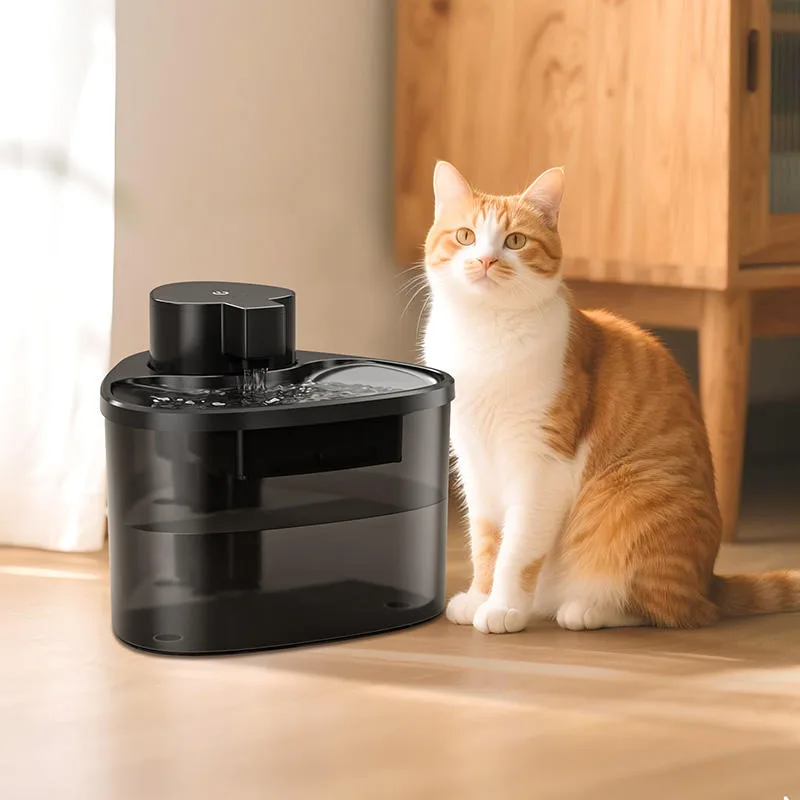
A category extension is an adjacent product that shares the compliance file, the supplier and the shelf plan with an existing feeder program. Water fountains are the natural first move, since pump safety and water contact materials fall under the same CE, FCC and RoHS discipline. The 3L automatic cat water fountain in stainless steel covers the premium end, while the smart automatic wet pet feeder with timer and fresh keeping answers the chilled-food request vets keep raising. 1) Bundle feeders and fountains to lift average order value per store. 2) Reuse one certificate workflow across the whole program. 3) Apply the same 0.5% defect gate to every line, because a weak SKU drags the shelf. Our data shows stores that extend the connected-pet range in one season reorder faster. In practice, with PetTech Global, extensions share tooling calendars, which keeps the 2026 countdown on one clock instead of three.
9. FAQ: Countdown Questions From Importers
How early should certificate verification start before a 2026 launch?
Certificate verification should start twelve months before the shelf date, which for a 2026 season means the paperwork conversation happens now, in 2025. First, request CE, FCC and RoHS files against the exact SKU, including the radio module named inside the FCC report. Second, confirm the firmware revision listed on the certificate matches the firmware loaded on production units, because a mismatch invites questions at the port. Third, archive the files with the merchandising team, not only with the factory. Our data shows nearly 100% of customs queries trace back to a document that existed for a cousin model instead of the shipped unit. In practice, with PetTech Global, each SKU receives a verified file before tooling sign-off, and the 0.5% defect-rate gate runs alongside the document check. Twelve months sounds generous. Sea freight, firmware updates and one holiday season consume the margin faster than any buyer expects, so start early.
What order quantity makes sense for a first compliant feeder order?
A sensible first order sits between a market test and a full program, and the feeder line supports both ends. Standard wholesale items run from 50 to 100 units, enough to place a connected feeder in a handful of stores and watch the return reasons. OEM programs start at 1,000 units with 15 to 25 day lead times, suitable once the SKU has proven the shelf. ODM programs start at 3,000 units with 30 to 45 day lead times, the right shape for a private label launch tied to the 2026 compliance window. Pricing spans $25.90 to $76.90, so the ladder can carry an entry dispenser and a camera flagship. Our data shows buyers who test small and scale on real return data outperform buyers who commit a container on spec sheet optimism. In practice, with PetTech Global, the 12 month warranty and the 0.5% defect gate apply at every quantity level.
Which feeder failure modes should a buyer test before signing?
A buyer should test the three failure modes that dominate warranty tickets across the connected feeder category. 1) Dispensing reliability: run several kilos of the local kibble through the auger, because pellet size varies by market and a jam on day three becomes a refund by day four. 2) App pairing: connect a phone, a tablet and a replacement router, since the pairing journey is where consumer reviews turn sour. 3) Sealing: check the hopper lid and bowl area against humidity, because moisture ruins dry food and generates cleaning complaints. Our data shows jam, pairing and moisture issues together explain most field failures in the feeder line. In practice, with PetTech Global, units such as the 6L smart WiFi pet feeder with HD camera and double bowls pass continuous dispensing and pairing tests under the 0.5% defect-rate gate before shipment. Test the same three points on samples, and the 2026 season starts quiet.
How does the countdown change for buyers outside the EU and US?
The countdown logic stays identical; only the document list and the deadline shift with the destination market. Buyers serving the EU and UK center the file on CE and RoHS records. Buyers serving North America center the file on FCC and RoHS verification. Markets in the Middle East, Southeast Asia and Latin America increasingly accept CE plus a local registration, and several registries have tightened ahead of 2026. First, ask the supplier for the destination-specific document list in writing. Second, add two months of buffer for any local registration step, because government queues do not negotiate. Third, confirm the warranty term, twelve months at PetTech Global, transfers to the local retail partner. Our data shows the registration queue, not the factory, is the usual bottleneck for emerging markets. In practice, with PetTech Global, the 0.5% defect gate and per-SKU certificates apply worldwide, so the 2025 preparation calendar looks the same in every port.
Ready to run the countdown properly? PetTech Global has supplied smart pet devices to 80+ countries since 2013, with 500+ OEM/ODM programs delivered by a team of 750+ staff. Request a quote and lock the 2026 production slot before the calendar locks the buyer instead.