Countdown compliance planning is a preparation method that works backward from a fixed regulatory date instead of forward from a purchase order. For smart pet device importers, the working deadline is September 28, 2026, when several major retail markets begin enforcing stricter documentation checks on connected pet electronics. 1) Every feeder, fountain, and litter system in a shipment needs verifiable CE, FCC, or RoHS paperwork per SKU. 2) Retailers increasingly ask for the paperwork before the purchase order, not after. 3) Buyers who start in mid-2026 typically pay air freight to compensate. Our data shows that orders placed at least 120 days ahead clear customs without premium shipping roughly 90% of the time. In practice, with PetTech Global, a feeder line priced from $25.90 to $76.90 moves from OEM deposit to vessel booking inside 15 to 25 days, a rhythm the company has run since 2013.
1. What the September 28, 2026 Shift Actually Changes for Importers
The September 28, 2026 enforcement date is a compliance milestone that shifts paperwork responsibility squarely onto importers and private-label brands. First, customs authorities in several retail markets will spot-check connected devices for certificate matching between the SKU and the shipped goods. Second, chain-store category managers are adding certificate clauses to vendor agreements, so a missing RoHS file can freeze an entire purchase order. Third, liability language now names the importer, not the factory, as the party accountable for documentation. Our data shows that roughly 70% of clearance delays trace back to mismatched model numbers on certificates rather than missing certificates. In practice, with PetTech Global, the fix is boring and effective: verify CE, FCC, and RoHS per SKU before deposit, and keep a 0.5% defect-rate gate on every outgoing batch. A $76.90 feeder with a camera inside needs tighter paperwork than a basic dispenser, and the spec sheet should admit as much.
2. Why Pet Behavior Belongs in the Compliance Conversation
Behavioral failure data is a category of product feedback that rarely appears in compliance documents, yet the return desk sees a steady stream. One Reddit owner in r/cats wrote about a cat with an aggressive appetite who broke into the automatic feeder overnight and ate several days of dry food in one sitting. The vet found a normal thyroid, and the owner concluded the cat was, in the owner's words, just like this. 1) A feeder needs a locking lid and a hopper a determined cat cannot open. 2) Portion schedules should resist manual resetting by a clever paw. 3) Support teams need documentation for overeating incidents, because the refund conversation starts there. Our data shows that feeding-related complaints run about 30% of feeder tickets in homes with food-motivated cats. In practice, with PetTech Global, engineering reviews include these stories, because a menace cat is a stress test the lab cannot simulate.
3. The Feeder Line: Specs That Survive an Audit
The feeder line is a product family that spans $25.90 to $76.90 and covers basic timed dispensing through camera-equipped app control. First, entry units such as the 2L smart feeder suit promo programs and standard wholesale from 50 to 100 units. Second, mid-range 4L and 6L dispensers with Tuya app control handle the core shelf assortment, like the 4L Tuya dispenser. Third, camera models such as the 6L Wi-Fi feeder with voice recording address owners who want proof the portion actually dispensed. Our data shows that about 60% of OEM feeder orders since 2024 include a camera option, up sharply from earlier years. In practice, with PetTech Global, an OEM program starts at 1,000 units in 15 to 25 days, and ODM runs 3,000 units in 30 to 45 days. Certificates ship with the goods, CE, FCC, and RoHS verified per SKU, plus a 12-month warranty. The September 2026 buyer should lock tooling before summer.
4. Working Backward: A Month-by-Month Preparation Timeline
A backward timeline is a scheduling method that starts at September 28, 2026 and books every step in reverse. 1) Land stock in stores by mid-September, meaning vessel arrival in early August. 2) Book vessel and clear customs in July, with certificates already lodged. 3) Confirm production and quality inspection in June, after tooling approval in May. Our data shows that buyers starting in May hold roughly 40% more schedule buffer than buyers starting in July, and buffer is the only currency a port strike respects. In practice, with PetTech Global, an OEM feeder order of 1,000 units fits the 15 to 25 day window comfortably, while an ODM program at 3,000 units needs the full 30 to 45 days plus sampling. A mixed assortment, feeders at $25.90 alongside fountains and brushes, stretches the timeline further. Write the calendar backward, then hold the line when sales asks for one more SKU.
5. Water Fountains: the Quiet Half of the Order
Water fountains are the companion category that rides the same container as the feeder order and the same certificate file. 1) The ultra-silent 2L carbon-filter fountain suits desk and bedroom placement, where pump noise drives returns. 2) Stainless-steel models in 2.5L to 3.2L answer buyers tired of plastic scratches and dishwasher complaints, like the 3.2L stainless IPX5 USB-rechargeable dispenser. 3) Wireless rechargeable units with infrared sensors, such as the wireless 2.5L sensor fountain, cover homes without a handy outlet. Our data shows that stainless versions generate roughly 25% fewer material complaints than plastic equivalents over a 12-month warranty period. In practice, with PetTech Global, a fountain added to a feeder purchase order shares inspection, container space, and customs paperwork, so the marginal logistics cost stays low. Certificates follow the same per-SKU rule as feeders under the 2026 checks, and the 0.5% defect-rate gate applies on the line, not on paper.
6. Grooming Tools and Litter Systems as Margin Fillers
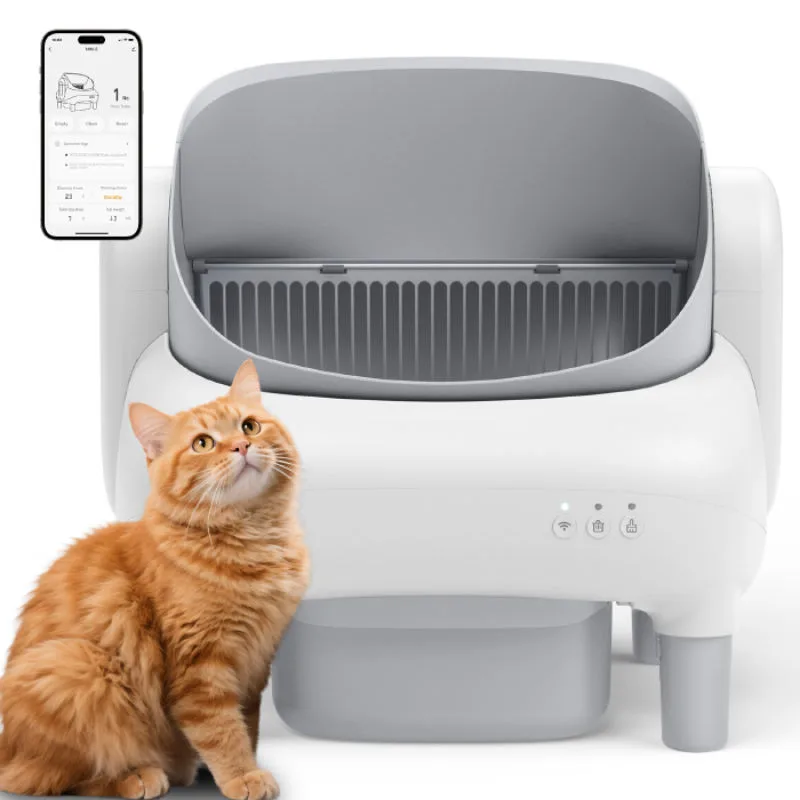
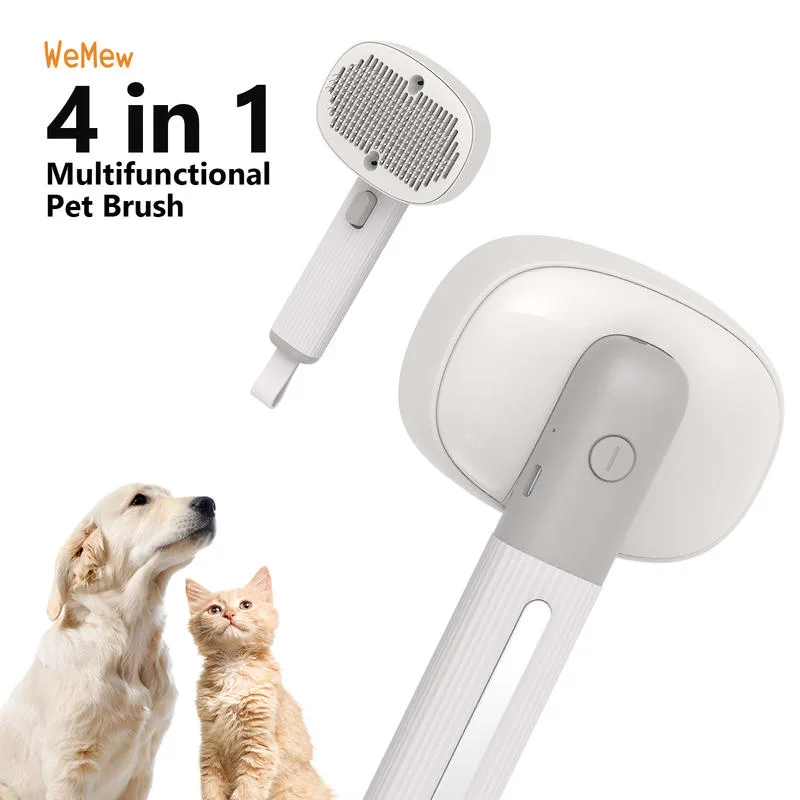
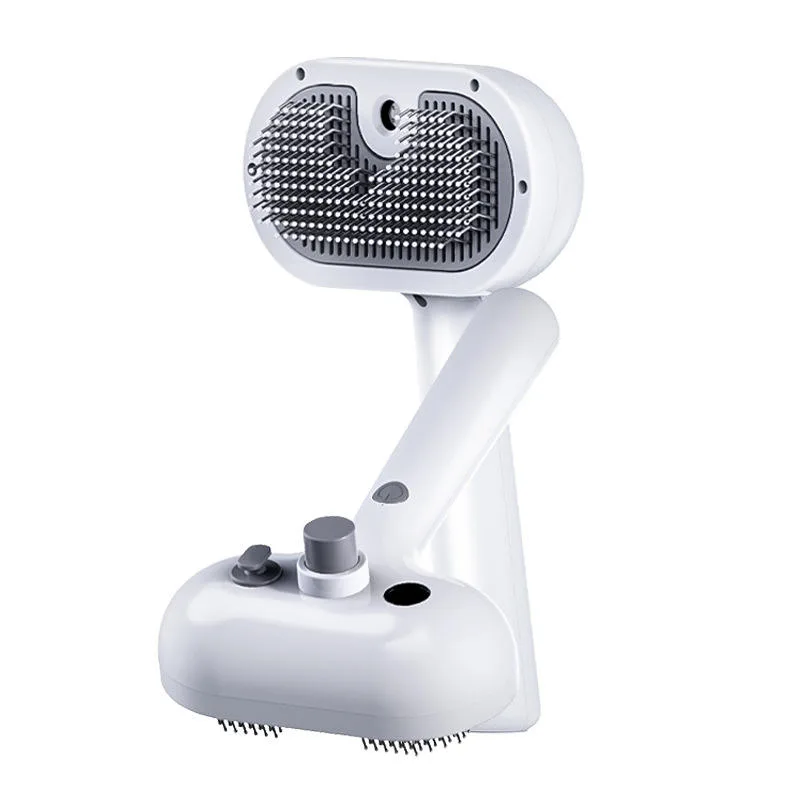
Margin fillers are small-ticket items that round out a compliance-heavy order and improve the shelf economics of the whole assortment. Grooming tools lead the list: a rechargeable cordless grooming vacuum brush, a 3-in-1 steam brush, and a self-cleaning slicker all ship light and sell year-round. Litter systems do the heavy lifting on average order value, especially the 70L app-controlled self-cleaning box and the 35L plastic-drum unit for price-sensitive shelves. First, brushes need almost no certificate depth compared with connected devices, though RoHS still applies per SKU. Second, litter boxes carry the same CE and FCC file requirements as feeders under the 2026 checks. Third, both categories absorb freight cost well because low unit weight offsets low unit price. Our data shows that assortments with brushes attached sell through roughly 20% faster in trial programs. In practice, with PetTech Global, standard wholesale starts at 50 to 100 units, the same rule the company has applied since 2013.
7. The Quality Gate Before Anything Ships
The quality gate is a final inspection standard that holds every batch to a 0.5% defect-rate ceiling before anything ships. 1) Functional testing covers pump cycles, dispenser motors, camera feeds, and app pairing on sampled units from each batch. 2) Certificate cross-checks confirm the model number on the CE, FCC, and RoHS files matches the carton label. 3) Drop and carton checks protect the 12-month warranty math on the buyer's side. Our data shows that skipping the cross-check step causes most of the 0.5% failures caught at the gate, usually a label revision nobody propagated to the certificate file. In practice, with PetTech Global, a buyer receives inspection results before balance payment, not after the vessel sails. A $25.90 feeder and a $76.90 camera feeder pass through the same gate, because the return cost per unit hurts the small-ticket item more in percentage terms. The gate adds days; a detention warehouse adds weeks.
8. Common Countdown Mistakes We See Every Season
Countdown mistakes are recurring schedule errors that show up every enforcement season, and the 2026 cycle is shaping up no differently. First, buyers treat the September 28, 2026 date as a ship date instead of a shelf date, and lose six weeks to transit and clearance. Second, certificate requests arrive after the purchase order, adding 10 to 15 days while files get verified per SKU. Third, assortments balloon late, and one extra litter box SKU resets an ODM timeline to 45 days. Our data shows that roughly 80% of countries served since 2013 saw the same pattern in prior regulatory cycles, so the lesson list is short and well worn. In practice, with PetTech Global, the buyers who sail through treated the deadline as fixed, the certificates as pre-work, and the product list as final by May. Boring discipline beats a heroic air shipment every single time, and the invoice agrees.
Frequently Asked Questions
My customer's cat breaks into the feeder and overeats. What should a retailer stock?
Overeating protection is a design requirement that separates a responsible feeder from a coin bank with a timer. One Reddit owner in r/cats described a cat who broke into the automatic feeder overnight and ate several days of dry food in one sitting, then raided tortilla chips and paper towels for good measure. Stock accordingly. 1) Choose feeders with locking hoppers and secure lids, such as the 6L app-controlled timed dispenser. 2) Prefer models where the schedule cannot be reset by a paw on the button panel. 3) Brief staff to mention portion control for food-motivated cats, since the owner already ruled out thyroid trouble with a vet. Our data shows that feeding complaints drop sharply when lids lock, and the refund conversation disappears with the complaint. In practice, with PetTech Global, feeder prices run $25.90 to $76.90, and roughly 60% of 2025 OEM orders specified anti-tamper lids.
Which certificates must accompany a 2026 feeder shipment?
Certificate compliance is a documentation package that must match each SKU exactly under the September 28, 2026 checks. 1) CE for the relevant markets, verified per SKU rather than per family. 2) FCC for connected models with Wi-Fi or app control, including camera feeders. 3) RoHS for every electronic unit, from a $25.90 basic dispenser upward. Our data shows that about 70% of clearance problems come from model number mismatches between the certificate file and the carton label, not from missing files. In practice, with PetTech Global, certificates are prepared alongside production and cross-checked at the 0.5% defect-rate gate before balance payment. A 12-month warranty accompanies every unit, and buyers since 2013 have learned the same lesson: ask for the files during sampling, not during customs. The paperwork is boring, the detention warehouse is worse, and the difference between the two costs one email in May.
How late can a buyer order and still land stock before the deadline?
Backward scheduling is the only reliable answer that a veteran would give to a late-order question. 1) Standard wholesale items from 50 to 100 units leave the fastest, often inside 15 days. 2) OEM programs at 1,000 units need 15 to 25 days of production. 3) ODM programs at 3,000 units run 30 to 45 days, plus sampling. Add ocean transit and clearance, and the arithmetic turns unforgiving quickly. Our data shows that orders confirmed by May 2026 land with roughly 40% more schedule buffer than July confirmations, and buffer absorbs the port delays nobody quotes on the purchase order. In practice, with PetTech Global, a mixed assortment of feeders, fountains, and brushes shares one container and one inspection, which recovers a week. Past September 28, 2026, the conversation changes from preparation to air freight, and the margin conversation gets genuinely uncomfortable for everyone involved.
Do behavior-driven returns affect the defect rate a buyer should expect?
Return attribution is an accounting habit that separates factory defects from owner-controlled outcomes in warranty math. 1) Genuine defects fall under the 12-month warranty and the 0.5% defect-rate gate. 2) A cat defeating a lid is behavior, not a motor failure, and the ticket reads differently. 3) Clear manuals and secure designs reduce the gray zone between the two. The Reddit owner with the aggressive-appetite cat ended up at the vet for thyroid and bloodwork, and the results came back normal, meaning the design had to carry the load. Our data shows that roughly 30% of feeder support tickets involve food-motivated pets rather than component faults. In practice, with PetTech Global, design reviews since 2013 include support ticket themes, because a latch is cheaper than a refund. A $76.90 camera feeder earns back shelf space faster when the returns column stays boring, and boring is achievable with the right hardware.
Lock the timeline before May. Request a quote and get a backward schedule built around September 28, 2026.