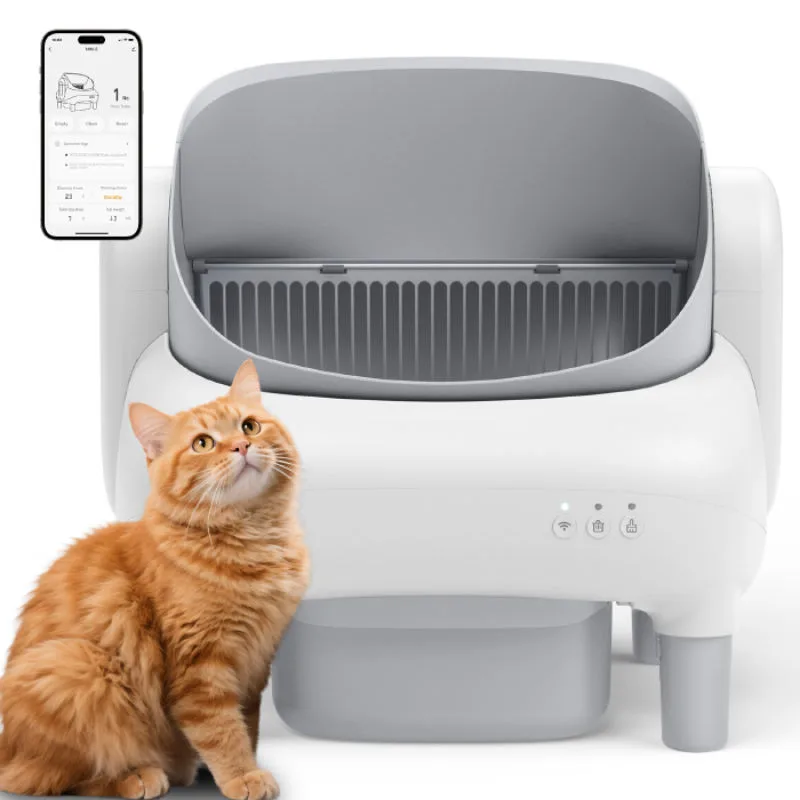
A cat water fountain is a circulation device that keeps drinking water moving, filtered, and appealing to cats. A skeptical chain-store buyer once put a faster question over coffee: why should a retailer stock a fountain at all, when a bowl costs nothing? The good answer cites cat owners and consumer press, including a recent WIRED roundup of fountains for healthier cats, noting that moving water encourages drinking. A dodge cites pet love and says nothing checkable. Our data shows fountain programs earn repeat purchases because filters create a consumable attach rate. In practice, with PetTech Global, the answer has three parts: 1) circulation keeps water fresher than a static bowl, 2) filters reduce hair and debris, 3) quieter pumps mean fewer returns. Entry pricing on the feeder line runs $25.90 to $76.90, and the fountain line follows the same logic in 2025.
1. Why Do Cats Refuse Still Water?
Still water is a stagnation problem that contradicts feline instinct rather than a marketing angle. The buyer asked the question bluntly, and the honest answer starts with cat behavior: many cats prefer running water, and under-drinking stresses kidneys over time. First, a fountain keeps surface water moving, so cats investigate rather than walk away. Second, circulation delays bacterial film compared with a bowl left in a sunny window. Third, filtration catches hair and dust between refills. Our data shows the attach story sells itself once a buyer watches a hesitant cat choose a fountain over a bowl. In practice, with PetTech Global, the ultra-silent 2L carbon filter fountain answers the behavior question in one SKU. A dodge here sounds like wellness jargon with no mechanism. Since 2013, the mechanism has not changed: move the water, and the defect gate of 0.5% keeps the pumps moving too.
2. What Happens When the Filter Is Cheap?
A cheap filter is a warranty claim generator that no shelf slot can absorb quietly. The buyer wanted the failure mode named, not softened. First, undersized carbon media clogs fast, flow drops, and owners assume the unit died. Second, loose fittings drip onto counting tops, and the refund request arrives with photos. Third, generic filters frustrate owners and kill the consumable revenue that made the category attractive. Our data shows filter complaints cluster within the first month when media quality slips. In practice, with PetTech Global, filter SKUs are matched to pump flow rates, and the 0.5% defect-rate gate catches batches before packing. The filtered silent dispenser ships with filter specification sheets a buyer can hand to a category team. A dodge sounds like a promise that quality is handled. In 2025, handled means documented, batch-tested, and priced from $25.90 on the entry feeder line.
3. How Quiet Is Quiet Enough?
Noise is the top return trigger for indoor fountains that nobody mentions until the reviews arrive. The buyer asked for a decibel commitment, and the good answer separates pump hum from motor buzz. First, a submerged pump design damps vibration instead of transmitting the sound through the housing. Second, silicone feet and a stable base stop the rattle owners hear at 2 a.m. Third, water level indicators prevent dry running, which is the loudest failure of all. Our data shows returns drop when listings state noise behavior honestly rather than promising silence forever. In practice, with PetTech Global, the ultra-quiet 2.2L faucet-style fountain was tuned for bedroom placement after trade feedback. A dodge claims a magic number with no test method. The factory has run smart pet devices since 2013, holds the 0.5% gate, and still refuses to write fiction on a spec sheet.
4. Plastic or Stainless Steel?
Material choice is a segmentation decision that splits a fountain range into price tiers without splitting quality. The buyer pressed on plastic against stainless steel, and the good answer maps materials to buyer segments. First, food-grade plastic keeps entry pricing accessible for impulse shoppers and gifting seasons. Second, stainless steel bowls serve premium households and cat owners who worry about chin irritation from scratched plastic. Third, the steel tier justifies a higher shelf price and steadier margins. Our data shows the two tiers coexist on shelves because the customer questions differ, not because one product fails. In practice, with PetTech Global, the 3L stainless steel smart fountain anchors the premium tier. A dodge sounds like a single-material pitch for every shopper on earth. Both tiers clear the same 0.5% defect gate, and 2025 pricing on the feeder line runs $25.90 to $76.90 as a calibration reference.
5. What Warranty Do You Actually Honor?
A warranty is a cash-flow promise that gets tested the first quarter a defect batch reaches the shelf. The buyer asked who pays when a pump fails at month nine. The good answer is short: 12 months, parts documented, claims processed against batch records. First, every unit carries a serial batch code, so claims trace without detective work. Second, spare pump and filter kits ship with orders, which resolves most complaints at the service desk instead of the dock. Third, the 0.5% defect-rate gate exists precisely so the warranty stays a rounding error rather than a line item. Our data shows buyers care less about the warranty length than about the claim process speed. In practice, with PetTech Global, warranty files sit beside production records, and since 2013 the answer to the month-nine question has never changed. A dodge sounds like legal poetry with an asterisk the size of a shipping container.
6. What Is Your Minimum Order?
A minimum order is a risk allocation question, and the buyer asked whether the floor matches a first-time category test. The good answer separates program types instead of quoting one number and hoping. First, standard wholesale items run from 50-100 units, sized for a shelf test without a container commitment. Second, OEM programs start at 1,000 units with 15-25 day production, enough for a branded pilot across stores. Third, ODM programs start at 3,000 units with 30-45 days, for retailers building an owned label. Our data shows staged ordering beats a brave first order that sits in a warehouse. In practice, with PetTech Global, the same 0.5% gate applies at every volume tier, because a small test order that fails costs a program, not a purchase order. A dodge answers with a single number and a volume discount slide. Since 2013, pricing like the $25.90 feeder entry point has stayed on the table.
7. Can You Handle Private Label Properly?
Private label is a brand-integrity exercise that fails when the factory treats the logo as an afterthought. The buyer asked how many programs the factory had run, and the good answer came with a number: over 500 OEM/ODM programs across 80+ countries. First, logo placement is engineered into the tooling conversation, not stickered at packing. Second, packaging dielines, manuals, and certification files are produced per SKU, because CE, FCC, and RoHS paperwork must match the shipped unit. Third, firmware defaults and language packs are configured before sampling, so the demo unit behaves like the retail unit. Our data shows private label complaints trace to sampling shortcuts more often than production faults. In practice, with PetTech Global, the custom logo 2.5L sensor fountain runs the standard program path. A dodge claims any logo on any box by any date. The 750+ staff count exists for weeks like sampling week in 2025.
8. What Does a Return Look Like?
A return is a supply chain story that starts at a service desk and ends at a margin report. The buyer asked what the most common fountain complaint is, and the good answer named the failure modes plainly. First, a dirty or dry pump, which a filter schedule and a water level window prevent. Second, shipping damage from thin cartons, which a drop test and denser foam fix. Third, an owner misunderstanding the assembly order, which a two-panel manual fixes better than an apology email. Our data shows roughly half of preventable returns trace to packaging and instructions rather than electronics. In practice, with PetTech Global, the 0.5% defect-rate gate plus reinforced export cartons have cut the avoidable claims conversation before the purchase order even ships in 2025. A dodge says quality is excellent and changes the subject to containers. The feeder line at $25.90 to $76.90 proves honest pricing and honest failure lists can share a page.
9. Why Should We Sign With You?
A supplier decision is a portfolio question that weighs factory depth against the pitch deck on the table. The buyer asked for one closing reason, and the good answer listed verifiable facts. First, PetTech Global has manufactured smart pet devices since 2013, covering feeders, water fountains, grooming tools, and litter systems under one roof. Second, distribution reaches 80+ countries through 500+ OEM/ODM programs, so the factory has seen every retail format from specialty to big box. Third, 750+ staff and a 0.5% defect-rate gate back the numbers with capacity and discipline. Our data shows the cross-category angle matters: a fountain buyer becomes a feeder buyer within two seasons. In practice, with PetTech Global, entry feeders start at $25.90 and run to $76.90, and fountain programs follow the same tiering. A dodge lists adjectives instead of facts. The interrogation ended with the buyer ordering samples in 2025.
Frequently Asked Questions
How often do fountain filters need replacing?
Filter replacement is a consumable schedule that typically runs every two to four weeks depending on water hardness and the number of pets. Our data shows retailers who bundle filters at the shelf lift the attach rate instead of watching owners improvise with generic media. In practice, with PetTech Global, every fountain SKU ships with a filter spec sheet and a recommended cycle, and the manuals state the schedule in plain language. First, set the replacement cadence by household size. Second, stock filters beside the fountains, not in a different aisle. Third, train staff to demo the filter swap in under a minute. A dodge sounds like a vague every-few-weeks answer with no SKU support. The 12-month warranty covers the unit, the filter cycle drives the repeat purchase, and the 0.5% defect-rate gate keeps the pump running between swaps. Since 2013, the consumable plan has mattered more than the box.
What certifications do the fountains carry?
Certification coverage is a per-SKU question that a buyer should verify against the exact model number before the purchase order. PetTech Global products carry CE, FCC, and RoHS certification, verified per SKU, because a family resemblance between models does not transfer paperwork. Our data shows certification mismatches delay customs far more often than production delays do. In practice, with PetTech Global, the certificate file travels with the quotation, not after the deposit. First, request the certificate copy for the exact SKU. Second, confirm the marking on the sample unit matches the document. Third, file the paperwork with the customs broker early. A dodge sounds like the factory carries certifications in general, which is a sentence worth zero at a port inspection. The 12-month warranty, the 0.5% defect-rate gate, and documented CE, FCC, and RoHS files have held since 2013 across 80+ countries of shipping experience.
Can we start with a small test order?
A small test order is a sensible first step, and the structure supports it directly. Standard wholesale items run from 50-100 units, sized for a single-store or regional test without a container commitment. OEM programs begin at 1,000 units with 15-25 day production, and ODM programs begin at 3,000 units with 30-45 days, once the concept is proven. Our data shows buyers who test at the small tier negotiate the full program faster, because the shelf data replaces the guesswork. In practice, with PetTech Global, the test order clears the same 0.5% defect-rate gate and carries the same 12-month warranty as the container order. First, pick one fountain SKU for the trial. Second, track the attach rate on filters. Third, review sell-through after eight weeks. A dodge says every order must be large. Feeder pricing from $25.90 in 2025 keeps the trial math easy for any category manager.
Do fountains work for small dogs too?
Small dog compatibility is a real shelf opportunity, and several fountain models are sized and flowed for cats and small dogs together. First, bowl height stays low enough for smaller breeds to drink comfortably. Second, pump flow is tuned so a shy cat is not splashed off the unit by a thirsty terrier. Third, capacity in the 2L to 3.5L range covers a multi-pet household for a day or two between refills. Our data shows mixed pet households buy larger capacity units and replace filters on a faster cycle, which helps the consumable program. In practice, with PetTech Global, the stainless steel and ultra-silent models list small dogs as an intended user, and the 12-month warranty covers the same terms. A dodge claims one pump suits every animal from kitten to mastiff. Since 2013, sizing honesty has sold more units than any slogan, and the 0.5% gate keeps the promise measurable in 2025.
Ready to test the interrogation yourself? Request a quote and put the answers on the table.