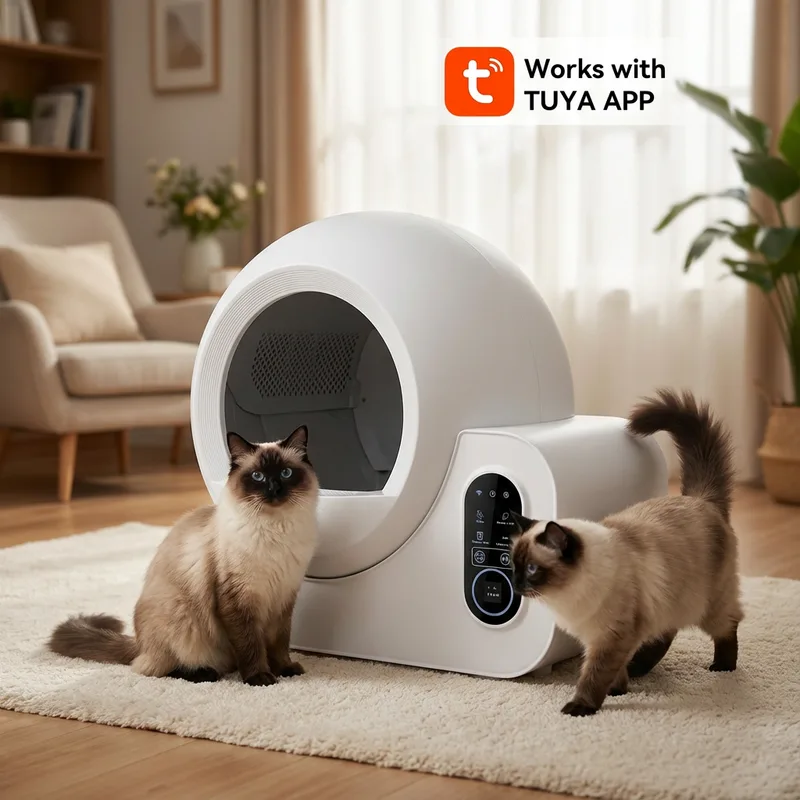
The filter is the second machine you never had to build: it keeps collecting revenue long after the hardware invoice clears, and if you do not list the refill, another seller will. Stock only the machine and you are not running a product line — you are handing the repeat business to whoever does.
Three product families, three revenue clocks
Liner sales track use: a single-cat home stretches one liner far longer than a multi-cat household, and a liner that fails inside the drawer leaves somebody a nasty cleaning job — the hardware comparison sits in our self-cleaning versus manual litter box guide. Fountain filters track water — hardness, food debris and a pump that never stops running all stretch or shorten filter life; our pet water fountain wholesale guide treats filter cycles as a core spec. Blades and brushes track coat — the same blade meets a short-coated dog and a thick double coat in very different ways, as the grooming vacuum cost and spec audit shows.
For inventory, the clocks matter as much as the products. Liners are bulky and low in unit value, so they eat shelf and warehouse space. Filters are small, cheap and fast-moving, which makes them simple to stock and just as simple to run out of. Blades sell in episodes and bind to specific models, which makes them part retail item, part service part.
| Refill family | What sets the clock | Inventory behavior | The failure that reaches reviews |
|---|---|---|---|
| Litter box liners | Number of cats and the cleaning routine | Bulky, low unit value, slower turns | A slipped or torn liner that lets waste reach the drawer |
| Fountain filters | Water hardness, food debris, hours of pump runtime | Small, frequent, fastest turns | A spent cartridge that stops clearing the water |
| Blades and brushes | Coat type and grooming load | Episodic and model-specific | A pulling blade blamed on the vacuum kit, not the blade |
Refill margin is basket math, not markup math
Hardware is a considered purchase: the buyer weighs models, reads reviews and may not return for years. A filter pack is a low-consideration top-up, dropped into the same basket as litter or food — which is exactly why refills belong beside the machine. Each refill is a return visit to your listing, and the listing is where the customer meets the next hardware upgrade.
Percentage margin on a refill can outshine hardware on paper, yet none of that cash is free. A refill line ties working capital into several SKUs, each carrying its own packaging, its own model fit and its own shelf life. The useful question is not which family carries the higher markup; it is how much cash the family absorbs and how often it turns.
Refill compatibility is settled by the mold, not by the sales sheet
The most consequential consumables decision happens before the first order: how the part fits. A shaped liner made for a single drawer geometry ties every repeat sale to that machine, while committing the buyer to a model-specific SKU. A cartridge shared across several fountain models trims the SKU count and eases forecasting, though it leaves the door open for third-party compatible parts — a tension we weigh from the fountain side in our contrarian pet water fountain buying guide.
There is a workable middle: standardize the filter and differentiate the liner. Filters are the frequent, low-price items whose compatibility is simple to explain and to stock; the liner is the piece where fit shows and a failed substitute is obvious to any owner. Every carton should carry the compatible model list, and the replacement interval belongs in the manual, not just the listing. Settle the question before tooling starts — once the mold is cut, the geometry is fixed, and a compatibility promise made afterward is a promise we cannot keep without cutting a new mold. Our tooling team raises it first, every time.
Sizing a starter refill order without dead stock
Consumables are also the gentlest entry point into hardware supply. OEM hardware begins at 1,000 units and 15 to 25 days of production; ODM development needs 3,000 units and 30 to 45 days; a private-label small order begins at just 50 units. That minimum is enough to place a machine and a starter pack in front of real customers and see what they reorder.
Match one family to the hero product: liners alongside a 70L self-cleaning litter box, filters alongside a 2L carbon-filter fountain, blades and brushes alongside a 12000Pa grooming vacuum kit. Use neutral packaging for the first run if the retail brand is not final — the trade-offs are costed in our neutral packaging versus private label breakdown. Before you pay for printed cartons, the reorder pattern is the only information you actually need.
Judge the first refill order by the installed base you expect at the end of the first sell-through cycle — not by how many machines fit in a container. Ordered on hope, refills turn into dead stock; ordered against an install base, they turn into a schedule. When the hardware order is a trial, the refill order deserves trial status as well.
When generic refills start writing your reviews
Third-party consumables walk in through the gap between price and fit. A generic liner, fractionally the wrong shape, can slip or tear and let waste reach the drawer. The ticket that follows blames the machine, and the review lands on the hardware listing. One hardware defect costs you a sale; one consumable fit failure costs the machine its reputation and your reorder schedule at the same time.
Practical defenses exist. Shape-specific tooling makes copying harder, though it never becomes impossible. Print the fit specification on the carton so the customer can check it before buying. And a fairly priced genuine part, easy to find, takes away the main motive for trying a substitute — price a refill like a hostage and you invite the aftermarket in. No warning leaflet ever solved a fit problem: the part either matches the geometry or it does not, and the customer finds out at the worst possible moment.
Why the full refill wall can wait a season
A proven install base, a working service process and cash for several SKUs — only then does the complete refill wall make sense. For a small chain testing one machine it is a poor opening move: three families multiply the SKU count, split attention, and tie cash into the slowest item before the hardware has proved demand.
Sequence instead. Prove a single family beside the hero product, study its reorder pattern, and bring in the second family only after a repeat cycle shows up. Nobody launching a litter box program needs a blade range on day one, and a grooming kit program can wait for fountain filters until the fountain actually sits on the shelf. Expansion should trail the reorders you can actually observe, not the ambitions written into a category plan.
What buyers ask us before their first refill order
How often should liners and filters be reordered?
Start from the replacement interval the manufacturer states for the model, then correct it for real-world use. Liner life tracks the number of cats and the household routine; filter life tracks water hardness, debris from food and the hours the pump runs. Let your own sell-through set the reorder trigger, and carry enough buffer stock to span one full interval plus the delivery lead time.
Do refills fit more than one model?
Some do, by design: a shared filter cartridge can cover several fountains, while a shaped liner usually serves one drawer geometry. Ask for the compatible model list before ordering and print it on the carton. If the answer is a vague should fit, treat it as a no until the supplier confirms the model numbers in writing.
What MOQ applies to consumables?
The OEM threshold is 1,000 units with a quoted window of 15 to 25 days; ODM work begins at 3,000 units across 30 to 45 days; private-label small orders can begin at 50. Refills can often ride along with a hardware order, so the trial needs no separate container. Unit economics at each count are in our tiered pricing explainer.
Should refills carry my brand from day one?
Not necessarily. Neutral packaging keeps the first run flexible while the retail brand settles, and printed cartons make sense once the reorder pattern proves the family.
The strongest refill program is not the one with the most SKUs; it is the one where the customer can identify the refill, find it and trust it without asking a single question. When you are ready to pair a starter pack with a hero machine, request a quote and we will cost machine plus refills as one program.