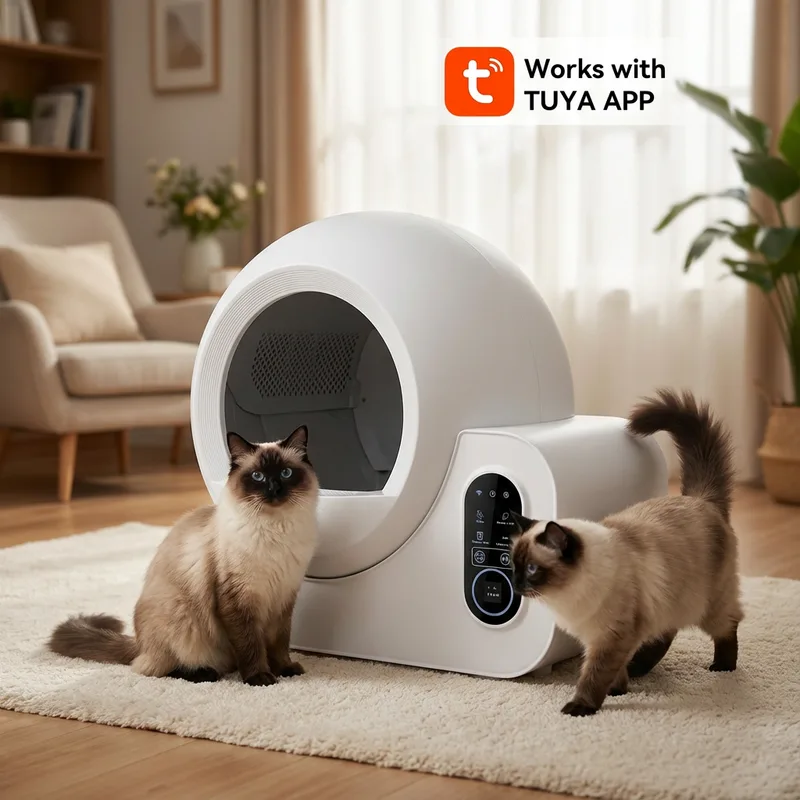
Walk any pet expo aisle today and the fountain story is all connectivity — app control, water-level alerts, drinking logs. On most wholesale shelves we see, that story is the wrong default. A plain stainless unit — pump, carbon filter, metal bowl, nothing that pairs — usually means fewer warranty claims and steadier reorders than its connected sibling. The hydration benefit behind the category holds up. The real argument is which version of it belongs on your shelf.
The hydration claim still holds
Cats are famously reluctant drinkers, yet they take in more water when it moves — something veterinary practices have been saying for years, especially around urinary health. That physiology is why the category exists, and none of it requires a Wi-Fi chip. Flow, filtration and freshness are what earn a fountain its shelf — the same reason retailers place them beside urinary-health diets and tell one coherent story. Where the category went wrong was stapling connectivity onto a health claim, then expecting the price premium to carry the support load too.
Where connected fountains cost you
However clever the app looks, a connected fountain is still a small IoT device that happens to hold water — and the water wins eventually. The failure modes arrive in clusters. Condensation works its way into sensor housings and sets off low-water alerts that are not real. Most early support tickets come from app pairing, long before a genuine hardware fault: a large share of connected-unit contacts are setup confusion, not breakdowns. Rechargeable models also carry batteries and chargers into a splash zone — precisely the environment where consumer electronics give up. None of this makes smart fountains bad products; it makes them products with a support cost, and that cost belongs in the model before any margin conversation starts.
The boring stainless unit is the safer anchor
Stainless fights the biofilm buildup behind feline chin acne, comes out of a dishwasher cycle intact and survives freight far better than thin plastic. The parts list is short — pump, carbon filter, metal bowl — with no app to pair, no software to crash and no firmware update to wait for. A stainless fountain with an integrated bowl, or the 3L stainless smart model, anchors a reorder program precisely because it excites nobody; it simply runs. Per-unit margin runs lower, granted. But the number that should decide your shelf is margin per year, once warranty handling and support hours are counted in. For a closer look at material choices, our stainless steel cat water fountain guide lays out the trade-offs.
Four situations where the smart unit earns its place
Buyers being honest about this category should describe the conditions, not mock it. The connected SKU works when at least one of these holds: premium shelves built for app-first owners, where a custom-logo smart fountain carries a private label; multi-pet homes that truly want a low-water alert, where the sensor justifies its fee; gift and seasonal ranges, where the packaging sells the purchase more than the support math does; and rooms without an outlet, where the wireless rechargeable fountain removes the placement problem entirely. What ties them together: support staffing is planned before launch, or the use case has stripped out the electronics risk. As a default, connected fountains disappoint; chosen deliberately, they can earn their spot.
Five checks before you commit
- Pump rating and noise figure, in writing. An ultra-silent 2L carbon-filter fountain wins the shelf test on sound rather than feature count; our explainer on what dB ratings really mean shows how to read the spec before ordering.
- Certificates per SKU. CE, FCC and RoHS all apply, but the check runs model by model, not per catalog — our line verifies each model individually before shipment. For the EU file set, start from our GPSR compliance checklist for smart pet electronics.
- Filter supply. Confirm that replacement filters are stocked against a published price list; miss this and the fountain becomes a single sale, with its accessory revenue handed to somebody else. The reasoning sits behind our consumables and repeat-revenue guide.
- Warranty terms in writing. Twelve months of coverage is the term we quote across fountains and feeders — put the number in the contract, not only in the brochure.
- A sample before the deposit. One sample costs a fraction of what a single container of returns costs, and for the two failures that matter most — noise and sealing — a quiet room is the only lab you need. We credit the $30 fountain sample fee against the first production order; our breakdown of what a factory sample actually tests covers the limits.
Order sizes and program timing
Fountain programs begin at 50 units per model — enough to trial a stainless-first thesis without betting a season on it. Private-label OEM on existing tooling needs 1,000 units and 15–25 days of production; ODM with a new mold needs 3,000 units and 30–45 days. As a price band, our feeder line runs from $14.69 to $69.99, and fountains usually come in under the top of that range. Combination units — a feeder and fountain in one body — serve shoppers who want a single plug powering the whole pet station. Capacity choices and filter cycles are mapped in our pet water fountain wholesale guide.
Fountain FAQ for wholesale buyers
Do vets really recommend a dog water fountain?
Veterinary practices commonly suggest circulating water for animals with a low thirst drive or under urinary-health management, and that is why a health story converts better than any feature list. That clinical case is built on flow, filtration and freshness; none of it needs connectivity.
Stainless or plastic — which should I stock?
Lead with stainless where the margin allows: hygiene, dishwashing, freight durability. Plastic still owns the ultra-budget slot and travel formats, where weight trims the freight bill. Writing off the value segment entirely would be foolish; just do not build your anchor around it.
Are smart fountains worth the extra margin?
Only where support costs were priced in before launch. Pairing questions, false alarms from sensors and charger wear all create contacts well before genuine hardware faults do. The buyers who do well with connected units hire help-channel cover before launch and place pairing videos next to the listing. If that is not your plan, stay with stainless.
What should a first fountain order include?
Two SKUs work best: a stainless anchor plus one quiet entry unit. Hold the smart variant back until sell-through data reveals which segment your local market really belongs to. A pair reveals more than a single unit, because the comparison exposes the shelf job your customers are hiring the product to do.
If you want to trial the contrarian shelf, request a quote for stainless and smart fountain programs — and ask for sample terms in your first reply.