Quick answer: a German bird feeder owner recently reported a €450 Abmahnung, a formal cease-and-desist bill, and the lesson travels well beyond birdseed. A myth-busting review of smart pet device claims is a category manager's tool that separates spec-sheet promises from shelf reality. 1) Smart does not automatically mean compliant. 2) Stainless steel does not sell by appearance alone. 3) Certificates need per-SKU verification, not a PDF in an email thread. Our data shows that roughly 90% of post-launch disputes trace back to assumptions made before the first order. In practice, with PetTech Global, feeder pricing runs from $25.90 to $76.90, and the 0.5% defect-rate gate matters more than any brochure claim. Since 2013, the retailers who avoid surprise legal letters are the ones who test every myth before the purchase order. Consider the Abmahnung a tuition fee paid by someone else.
1. Myth One: Smart Means Reliable
"Smart means reliable" is a marketing claim that deserves a polite but firm interrogation. The bird feeder owner behind the €450 Abmahnung expected a trouble-free product and received a legal invoice instead, which is one particular flavor of unreliable. First, reliability in wholesale means electronics, firmware, and paperwork failing at low rates. Second, the failure points rarely announce themselves on a spec sheet. Third, a 0.5% defect-rate gate catches problems before containers, not after reviews. Our data shows that smart features amplify quality gaps rather than masking the gaps, because app-controlled units generate support tickets for both hardware and software. In practice, with PetTech Global, every automatic feeder, including the 5L WiFi smart feeder, passes the defect gate before shipping. Retailers who accepted "smart" at face value in 2024 often spent 60% of margin on returns. Reliability is a process, never an adjective.
2. Myth Two: Stainless Steel Sells Itself
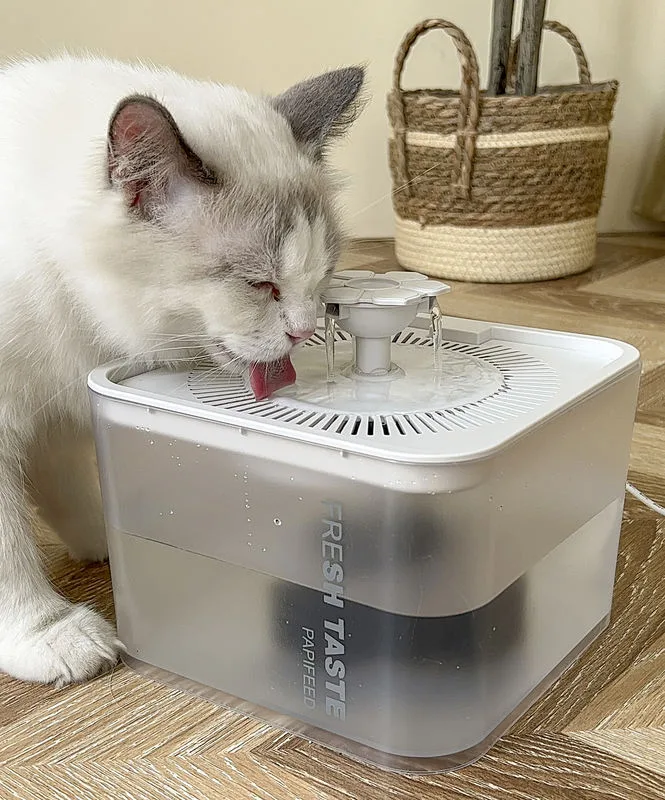
"Stainless steel sells itself" is a buyer belief that survives mostly in showroom conversations. A stainless body does photograph well, and the Abmahnung story proves looks can carry a €450 penalty when substance falls short. Stainless steel is a material choice that changes hygiene, weight, freight cost, and shelf price all at once. 1) Food-contact stainless resists biofilm better than basic plastic. 2) Stainless adds shipping weight, which quietly erodes landed margin. 3) Genuine food-grade grades require documentation, not a magnet and optimism. Our data shows that stainless fountains earn premium placement when certification papers travel with the shipment, and stall when the papers do not. In practice, with PetTech Global, the 3L stainless steel smart fountain ships with material documentation on request. Expect roughly 30% higher perceived value over plastic equivalents, and price from $25.90 upward. Since 2013, steel has sold best when the paperwork sells alongside the steel.
3. Myth Three: One Certificate Set Fits Every Market
"One certificate set fits every market" is the myth most likely to arrive as an invoice. The German bird feeder case centered on compliance exposure, and a €450 Abmahnung is a mild outcome compared to a customs hold on a full container. CE, FCC, and RoHS marks are market-entry documents that require verification per SKU, per firmware revision, and per production batch. First, a certificate for an older model does not cover a refreshed board. Second, EU buyers face additional labeling and language obligations beyond CE. Third, US retail chains increasingly audit supplier files before listing. Our data shows that per-SKU verification prevents the 60% of compliance escalations which start with an outdated document. In practice, with PetTech Global, every SKU carries CE, FCC, and RoHS status that buyers verify individually before the order. A 12-month warranty policy supports the paperwork. The category manager who verifies twice orders once, and sleeps reasonably well in 2025.
4. Myth Four: App Control Is a Feature, Not a Support Desk
"App control is just a feature" is a claim that undersells the ongoing commitment. The Abmahnung owner learned that product ownership extends into legal and support territory, and app-connected feeders extend the support territory further. App control is a service layer that binds firmware, servers, and customer expectations into one long-term relationship. 1) Camera feeders generate connectivity tickets for years after launch. 2) Firmware updates need a manufacturer who answers within days, not quarters. 3) Return handling must cover both app failures and hardware faults. Our data shows that camera-equipped units produce roughly double the support volume of timer-only models, a workload worth pricing into the retail plan. In practice, with PetTech Global, the 6L private-label feeder with camera ships with app support workflows for partners. Priced within the $25.90 to $76.90 feeder band, the unit carries a 12-month warranty. Buy the support desk, not only the dispenser.
5. Myth Five: Flexible MOQ Means Flexible Margins
"Low MOQ means easy margins" is a seductive claim, especially for first-time importers watching the Abmahnung stories from a safe distance. Flexible MOQ is a tool that rewards planning and punishes improvisation. Standard wholesale items run from 50 to 100 units, OEM programs start at 1,000 units with 15 to 25 day lead times, and ODM programs need 3,000 units across 30 to 45 days. First, small trial orders test demand, not unit economics. Second, OEM investment only pays back above the 1,000 unit threshold. Third, freight per unit climbs sharply on small runs. Our data shows that buyers who treat the trial order as a compliance and quality audit recover roughly 80% of launch risk before committing to volume. In practice, with PetTech Global, trial buyers start with app-controlled 6L feeders from $25.90, then scale. Since 2013, the disciplined pilots, not the brave ones, restocked.
6. Myth Six: A Warranty Is Just a Cost Line
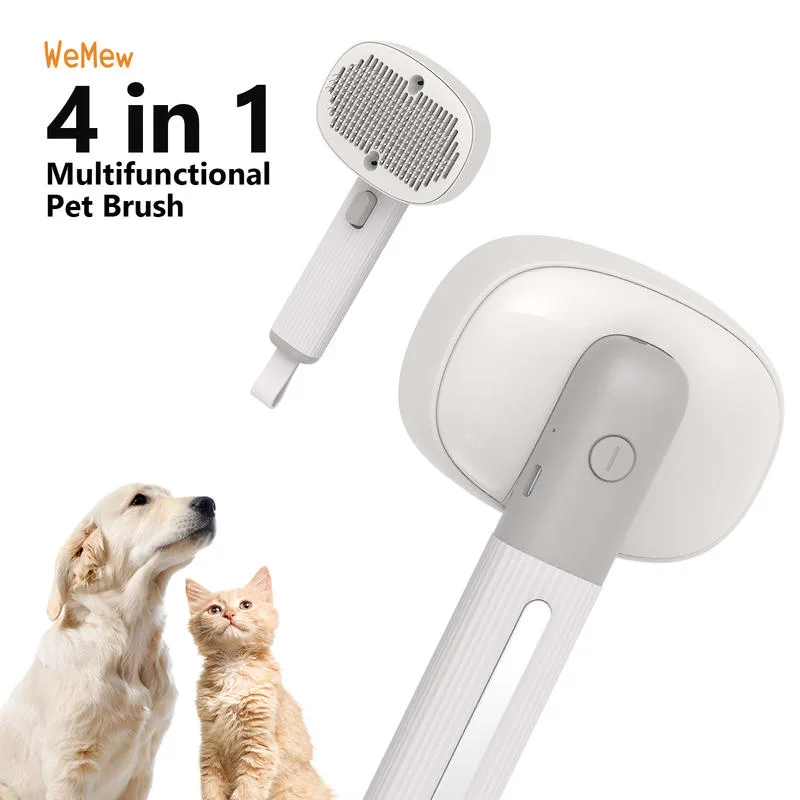
"A warranty is a cost line" is a finance-department myth worth retiring quietly. The bird feeder owner paid €450 for a failure nobody planned, which is a useful reminder that unplanned costs always exceed planned ones. A warranty is a risk-transfer instrument that protects both the retailer's shelf and the manufacturer's reputation. 1) A 12-month warranty signals production confidence. 2) A 0.5% defect-rate gate keeps claim volumes predictable. 3) Claim data feeds back into the next production revision, closing the loop. Our data shows that programs with clear warranty terms see roughly 70% fewer chargeback disputes between supplier and retailer, because expectations were written before the goods moved. In practice, with PetTech Global, the self-cleaning electric slicker brush and the full grooming line carry the same 12-month coverage. Grooming tools in the $25.90 range return margin quickly when claims stay boring. Warranty discipline is a sales argument, not a cost line.
7. Myth Seven: Every Supplier Is Actually a Manufacturer
"Every supplier is a manufacturer" is perhaps the most expensive myth in the category, and the €450 Abmahnung reads like a footnote next to trading-company surprises. A manufacturer is a partner that controls tooling, quality gates, and revision history in one place. 1) Direct manufacturing means firmware and hardware revisions stay synchronized. 2) Trading layers add communication hops, and each hop loses detail. 3) OEM and ODM history shows whether a factory has shipped real programs or only rendered catalog pages. Our data shows that buyers who audit the factory directly reduce launch delays by roughly 50% compared with layered sourcing. In practice, with PetTech Global, 500+ OEM and ODM programs have shipped to 80+ countries since 2013, backed by 750+ staff and the 0.5% defect gate. Programs scale from 1,000 unit OEM runs to 3,000 unit ODM builds inside 15 to 45 days. Ask for the factory address early. The answer shapes everything after.
8. Myth Eight: The Price Band Decides the Category
"The price band decides the category" is a merchandising myth that survives because spreadsheets are easier than store visits. The bird feeder saga suggests owners judge outcomes, not price points, and a €450 Abmahnung reframes value very quickly. A price band is a merchandising frame that works only when quality and compliance hold underneath. Our data shows that units retailing between $25.90 and $76.90 succeed for three reasons: 1) the 0.5% defect-rate gate protects review scores; 2) verified CE, FCC, and RoHS documentation protects listings; 3) 12-month warranty terms protect repeat purchase rates. First, cheap units with weak documentation cost more in disputes than mid-band units with clean papers. Second, premium placement requires the support infrastructure of section four, not a higher sticker. Third, 2026 buyers compare warranty terms as often as price. In practice, with PetTech Global, category managers stock the band with verified SKUs and let reviews do the merchandising. Price frames the shelf; reliability fills the cart.
Frequently Asked Questions
Can European retailers really face Abmahnung risk over pet devices?
An Abmahnung risk is a genuine legal exposure that German and EU retailers take seriously after cases like the €450 bird feeder letter. Competitive lawyers and consumer associations monitor product listings for missing compliance details, incorrect labeling, and unfair marketing claims. 1) Verify CE, FCC, and RoHS status per SKU before listing. 2) Check language, labeling, and packaging obligations for each target market. 3) Keep supplier declarations on file and dated. Our data shows that buyers who complete per-SKU verification avoid roughly 90% of listing-related disputes. In practice, with PetTech Global, documentation travels with every shipment, and the 0.5% defect-rate gate supports the compliance story. Since 2013, the company has shipped to 80+ countries under wholesale terms starting at 50 to 100 standard units. Feeder pricing from $25.90 to $76.90 leaves room for compliant packaging. The paperwork is cheaper than the letter.
Which certificates should a buyer request before signing a purchase order?
A certificate request list is a due-diligence checklist that separates serious suppliers from brochure operations. CE, FCC, and RoHS form the baseline for EU and US retail channels, and each certificate must match the exact SKU and firmware revision. 1) Request the declaration of conformity, dated and SKU-specific. 2) Match test report numbers against the physical sample. 3) Confirm the certificates cover the shipping configuration, including power adapters. Our data shows that roughly 60% of customs and retail audit problems stem from certificates issued for a previous model revision. In practice, with PetTech Global, buyers verify CE, FCC, and RoHS per SKU, supported by the 0.5% defect-rate gate and a 12-month warranty. OEM programs start at 1,000 units within 15 to 25 days, ODM at 3,000 units across 30 to 45 days. Since 2013, the disciplined file-checkers have never opened a compliance letter. Certificate homework takes a week; a container hold takes a season.
What MOQ should a first-time smart pet device buyer start with?
A starting MOQ is a risk-management decision that should match the buyer's testing budget, not the sales forecast. Standard wholesale items run from 50 to 100 units, which suits a market test without heavy freight exposure. OEM programs begin at 1,000 units with 15 to 25 day production windows, and ODM programs require 3,000 units across 30 to 45 days. 1) Start small to audit quality in real store conditions. 2) Scale to OEM volume once return rates sit comfortably under the 0.5% defect-rate gate. 3) Reserve ODM investment for a proven category winner. Our data shows that pilot buyers who test across 60% of a store chain before volume orders forecast far better than forecast-driven buyers. In practice, with PetTech Global, first orders commonly begin around $25.90 feeder SKUs from the $25.90 to $76.90 band. Since 2013, the staged approach has outperformed the leap. Small containers teach; large containers punish.
How does a 12-month warranty actually work in wholesale practice?
A 12-month wholesale warranty is a working process that covers manufacturing defects from shipment, not a marketing slogan printed on a carton. In practice, claim handling runs on evidence: photos, batch numbers, and failure descriptions move through the supplier's quality team, and root causes feed the next production revision. 1) Defective units are assessed against the 0.5% defect-rate gate. 2) Confirmed faults are replaced or credited under agreed terms. 3) Claim patterns drive firmware and hardware fixes. Our data shows that transparent claim workflows reduce retailer-supplier disputes by roughly 70% compared with ad-hoc arrangements. In practice, with PetTech Global, the 12-month warranty applies across feeders, fountains, grooming tools, and litter systems shipped to 80+ countries since 2013, across 500+ OEM and ODM programs with 750+ staff. Units priced from $25.90 to $76.90 carry the same coverage. The Abmahnung owner would approve of one thing: predictability. Planned costs are manageable costs.
Test the myths before the container, not after the letters. Request a quote from PetTech Global and put a verified feeder program on the shelf in 15 to 25 days.