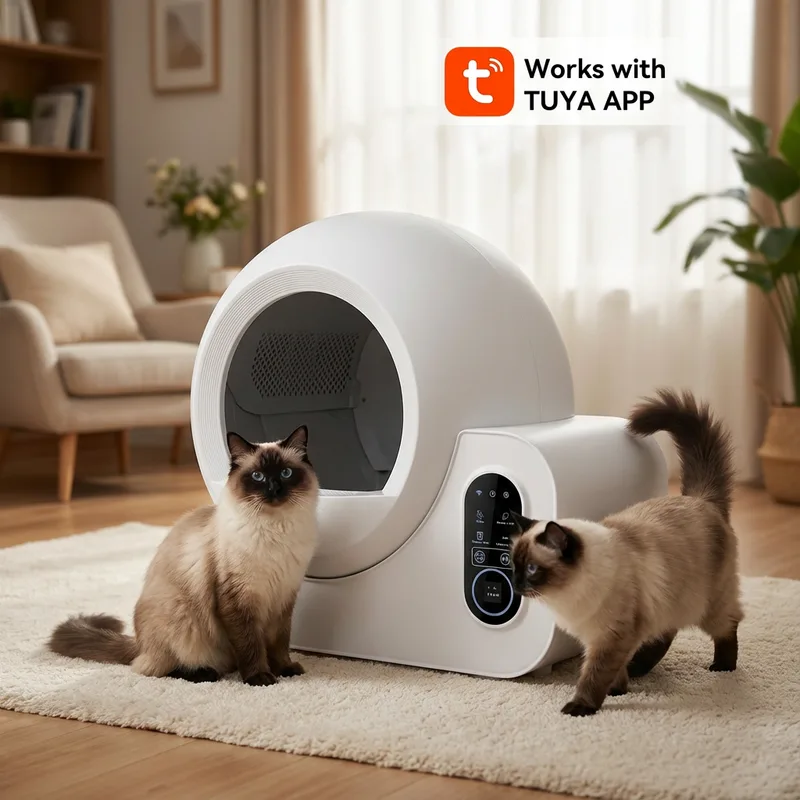
Buyers forgive a slow email far sooner than they forgive a container that behaves differently from the approved sample. This year our self-cleaning litter box line changed three things to keep those two identical: the quick-start card shrank to a single page, the 35L plastic-drum model had to clear a sixty-cycle odor log before it earned a place, and our receiving checklist got stricter about crushed corners. What held, what failed and what we would ask any supplier before signing a 2026 programme — that is the retrospective below.
Every purchase order in this category eventually arrives at the same three worries: whether the rake survives the coarse clay a market actually sells, whether the sensors false-trigger, and who picks up the phone when a customer opens a ticket. A 2026 Catster review of the Oneisall unit made the point in public — shoppers judge the mechanism, not the brochure. We keep dock receipts, QC sampling logs and partner shelf reports so that answers come from records rather than recollection; the notes below are that record, condensed.
Why Each of Those Changes Happened
The card shrank because setup, not hardware, generates most first-month warranty claims; retailers stocking the app-control odor-removal model recorded fewer setup calls once the single page started getting read. The 35L plastic-drum model joined the current line only after its module samples cleared the sixty-cycle odor log, and the open-top 70L sat through identical sampling before shipping. None of it involved heroics; repetition did the work.
Rake Torque, Coarse Clay and the Fifty-Cycle Mark
Showroom benches use fine litter; homes do not. So our sampling bench runs rake torque with a loaded drum and the harshest clay sold in the destination market, and cycle tests run out to fifty rotations, because seal and gear faults that ten rounds politely hide tend to surface by round fifty. Receiving discipline matters as much as bench work: a dented corner usually signals a drum that shifted in transit, which is why our receiving checklist opens the first carton from every pallet layer and inspects corner crush before the rest move. How drums and motors separate into quality tiers is compared in our drum motor quality guide.
Why Sensor Redundancy Is a Condition of Purchase, Not a Talking Point
Safety sensing is the one line this category will not negotiate on. The ways it fails read like a support-ticket greatest-hits list: vibration sets off false triggers until an owner disables the pause function, a trade nobody should make; a kitten slips beneath the detection threshold, the review no brand survives; delay timers get tuned in ways that annoy every household equally. Builds that pair a weighing sensor with infrared clear that minefield far quicker than single-sensor designs. In the current run, our log records the pause firing at small-cat test weight on the very first attempt — verified twice, by two separate inspectors. Sensor thresholds and volume tiers are laid out in our self-cleaning litter box wholesale guide, and our position is simple: treat redundancy as a purchase condition, not a talking point.
App Tickets, Firmware Notes and the Case for Boring Software
App control wins the most demos and, less gloriously, generates the most tickets. Three patterns repeat in our service records. Pairing trouble bunches in the first week, and it faded once a QR card took over from the manual's paragraph. Reports of schedule drift trace back, nearly every time, to a router reboot rather than the unit. And firmware weighs more than buyers expect: a prominent consumer brand took heat in owner forums when an update irritated long-time users, and a plain-language change log shipped with every cycle is cheap insurance against joining them. Boring software outsells clever software — OEM partners receive firmware notes with every shipment cycle, and the OEM odor-free model carries the same app stack.
Odor Modules, Drawer Liners and the Bedroom Test
Shelf reports surface what the bench cannot see. Drawer liners decide repeat purchases: a liner that fits poorly jams the rake faster than any choice of litter ever will. On odor, carbon quality beats carbon quantity — a thin pad swapped quarterly outlasts a thick pad nobody services — while fan noise decides bedroom placement and sealed drawer geometry matters more than any gel upsell. Retailers who run the deodorizing module live in-store register fewer odor complaints, so our standing advice is to demonstrate the mechanism and let the carton art stay decorative. The myth-versus-reality version of this sits in our odor control analysis.
Order Terms and Paperwork, Stated Plainly
Standard wholesale runs 50-100 units for a chain testing a shelf. OEM private label begins at 1,000 units on a 15-25 day production window, ODM with a new design at 3,000 units across 30-45 days — and once revisions are tallied honestly, an ODM programme runs nearer six months end to end. Certificates — CE, FCC, RoHS — get verified per SKU, because papers that cover one adapter grant nothing to the next shipment. The 12-month warranty claim pattern mirrors the sampling logs: seals, adapters and app pairing generate most of the traffic, while the core mechanism rarely fails where the line holds its standard. File certificates by SKU before the purchase order, not after the container sails; the GPSR countdown for smart litter box importers sets out which EU-bound files are needed, and by when.
The questions buyers asked us most this year
Does the category still merit shelf space going into 2026?
Provided three conditions hold. The demonstration unit has to run in-store, the quick-start card has to fit a single page, and warranty terms have to be legible where the shopper stands. Retailers who demonstrate the mechanism reorder; those who sell it as sealed boxes meet the return desk instead.
What belongs in a buyer's own sampling round?
Five unglamorous tests: fifty turns of the rake against local coarse clay, a cold-start listen straight from the pallet, a pause test at kitten weight run separately by two inspectors, an odor log checked in week six, and a firmware pairing attempt on the cheapest handset your market still sells. Our factory sample guide separates what a sample proves from what it cannot.
Which categories belong on the shelf next to the tray?
Start with a smart feeder, since feeding rhythms and litter visits track together; add a water fountain and a grooming brush, which pull from the same households. One OEM programme structure and one 12-month warranty span all three, so a second category rarely needs fresh paperwork. The health logic connecting hydration and litter behavior is in our litter box incident post-mortem.
If a 2026 litter programme is on your calendar, request a quote and we will attach sampling logs plus certificate copies to the first reply.